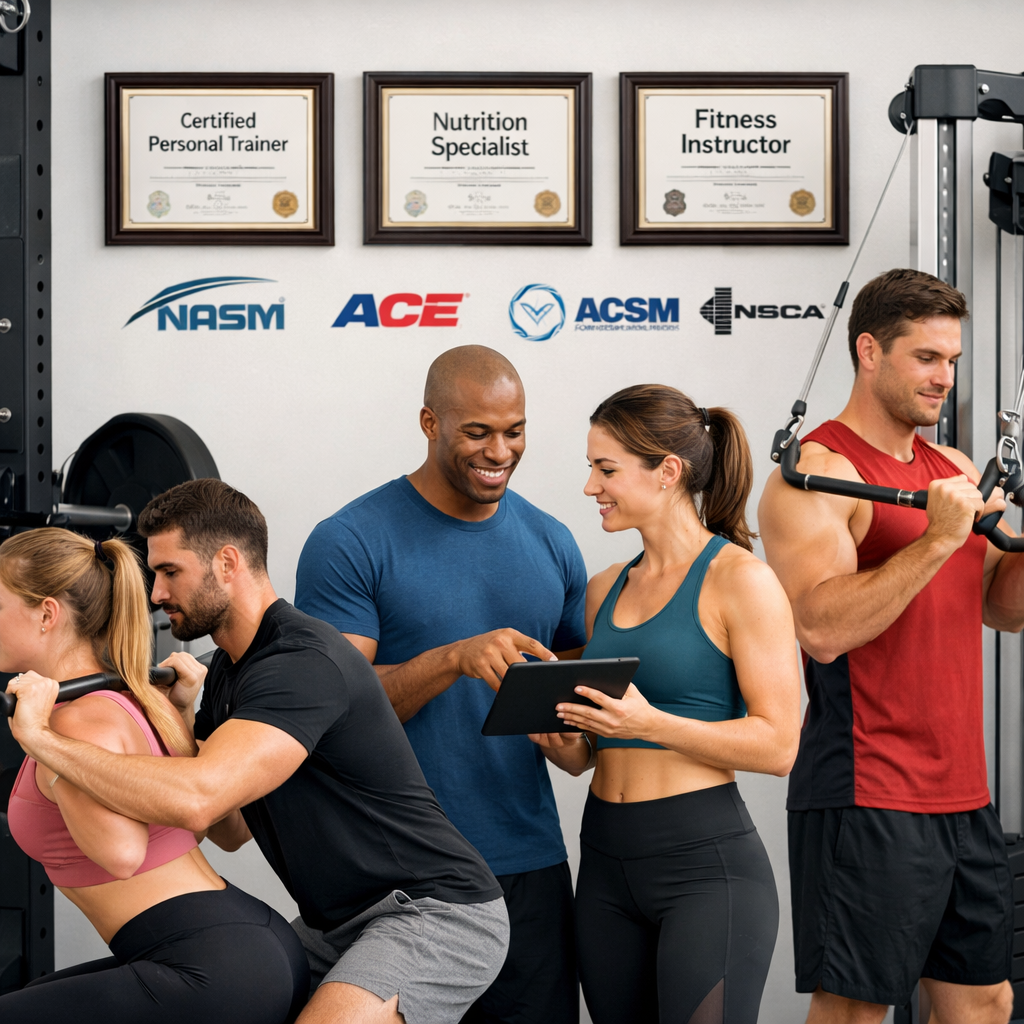
10 Health Clubs With Top-Rated Personal Trainers and Credentials
Finding health clubs with the best personal trainers and credentials starts with proof: nationally recognized certifications, a clear movement assessment process, structured programming, and safety protocols you can verify. This guide spotlights 10 clubs that support measurable progress through one-on-one training, from concierge fitness to boutique studio formats. It’s built for physique athletes and serious trainees, but general fitness seekers will also find high-quality, safer options. “Trainer credential” refers to verifiable qualifications from recognized bodies (e.g., NASM, NSCA, CSCS), current CPR/AED, and documented continuing education; these credentials matter because they standardize competence, reduce injury risk, and correlate with better outcomes when paired with assessments, progressive programming, and consistent retesting.
FitnessJudge
FitnessJudge exists to protect athletes by making coach and club decisions verifiable, transparent, and health-first. Our frameworks combine step-by-step gym suitability checks and contest-prep coach vetting by division to de-risk choices for novice–intermediate competitors in bodybuilding, classic physique, men’s physique, figure, bikini, and wellness. Start with our gym suitability checks at FitnessJudge to compare options with less risk and more transparency. We prioritize documented credentials, assessments, and retesting—the same filters used in this guide.
How we selected these health clubs
We applied consistent, replicable filters so readers can weigh trade-offs between cost, credentials, and program quality:
- Verified trainer credentials: NASM, NSCA, or CSCS on bio pages or credential directories; current CPR/AED.
- Performance-focused systems: movement screens, biometric testing, sport/performance clinics, and recovery integration.
- Pricing transparency and value signals: what assessments are included, depth of programming, and recovery services.
“Movement screen” means a structured set of tasks (e.g., squat, hinge, lunge, press, gait) to identify mobility, stability, and technique limits that inform individualized programming and reduce injury risk. “Biometric testing” captures objective markers (e.g., body composition, resting HRV, VO2 estimates, grip strength) to calibrate training loads, monitor adaptation, and schedule re-tests to validate progress. These are the same criteria used in FitnessJudge’s gym suitability checks.
Suggested summary table (FitnessJudge’s view based on publicly available information and club positioning):
| Club | Credentials visibility | Assessment depth | Specialty teams/focus | Typical pricing band |
|---|---|---|---|---|
| Equinox | High | Advanced | Pilates, recovery access | $$$ |
| E by Equinox | Very high | Concierge/advanced | Private suites, bespoke | $$$$$ |
| EXOS | High | Advanced/performance | Sport performance systems | $$$$ |
| Life Time | High | Moderate–advanced | Broad specialty staff | $$–$$$ |
| The Houstonian Club | High | Advanced/wellness | Spa/clinical integration | $$$$ |
| Chelsea Piers Fitness | Medium–high | Moderate–advanced | Sport skill facilities | $$$ |
| Gold’s Gym | Variable by location | Basic–moderate | Strength/hypertrophy focus | $ |
| Orangetheory Fitness | High (coaches/classes) | Standardized class | HR-based conditioning | $$ (boutique) |
| Body by Simone | Medium | Conditioning-focused | Dance/interval specialists | $$ (boutique) |
| Rise Nation/Rise Movement | Medium | Basic–moderate | Vertical cardio specialists | $$ (boutique) |
Equinox
Equinox ranks high for premium one-on-one training quality, access to certified personal trainers, and complementary services like private studio Pilates that support structured programming, with digital continuity via the Equinox+ app for tracking and plan adherence (see Good Housekeeping’s gym membership guide). As reported by CNET, Equinox operates around 108 gyms worldwide, offering strong access in major markets. Expect luxury-tier pricing—often $150–$350+ per month with location-based initiation fees. Due diligence: request trainer bios, verify NASM/NSCA credentials, ask for the movement assessment protocol, and confirm program review cadence (e.g., every 4–6 weeks).
E by Equinox
E by Equinox is the brand’s ultra-premium concierge tier with annual dues that start around $26,000, signaling maximal service, privacy, and bespoke planning (AOL’s overview of over-the-top fitness clubs). Expect private training suites, biometric testing, and highly individualized one-on-one training. Before buying, confirm what assessments are included, frequency of re-testing, and whether recovery and nutrition are fully integrated to justify the return on investment.
EXOS
Built around sport science and performance systems, EXOS serves elite performers—from Olympians and military units to executives—in tightly coached environments that emphasize movement quality, speed, and durability (as profiled in AOL’s roundup). Pricing reflects the model, with memberships roughly $900–$1,760 per month. Verification steps: confirm staff credentials (e.g., NSCA CSCS), insist on a movement screen and a performance testing battery, and ensure recovery/nutrition are integrated. Program checklists should read: baseline testing → periodized mesocycles → scheduled re-tests.
Life Time
Life Time positions itself as a broad-access lifestyle club with large-scale facilities (often around 100,000 square feet) and family-friendly services such as up to 2.5 hours of daily childcare in many locations, supporting consistent training schedules (as highlighted by Good Housekeeping). Pricing often starts near $75 per month in some markets and can reach luxury tiers of $150–$350+ depending on location. To align with physique goals, review trainer bios for NASM/NSCA credentials, ask to see assessment and program templates, and confirm specialty needs (e.g., heavy free weights or posing spaces where available).
The Houstonian Club
The Houstonian Club follows a country-club model with integrated wellness, small-group and private coaching, and spa/clinical services to round out individualized programs. Initiation fees can exceed $10,000, and monthly dues start near $330 (reported by AOL). Verify which assessments are included up front, the depth of therapist/clinician partnerships, and whether trainers hold advanced credentials aligned to your goals.
Chelsea Piers Fitness
Chelsea Piers operates as a sport-performance environment where skill development (e.g., skating, golf simulators) complements strength training for targeted outcomes. Memberships commonly range between $200 and $350 per month (AOL). Ask for sport-specific assessments, strength benchmarks, and a plan to integrate on-site facilities into periodized programming.
Gold’s Gym
Gold’s Gym is synonymous with strength heritage, heavy free weights, and hypertrophy-friendly layouts, but trainer depth varies by location. Typical monthly dues run about $45–$60 with initiation fees that can reach roughly $59 (summarized in TrueMed’s analysis of gym membership prices). Verify trainer certifications (NASM/NSCA), ask about experience with hypertrophy and peaking blocks, and check for posing-friendly spaces or nearby resources if you’re prepping for stage.
Orangetheory Fitness
Orangetheory’s coached group model standardizes intensity using five heart-rate zones, with an “orange zone” target at 84–91% of max HR and an aim of 12 “splat points” from minutes spent in the orange/red zones (see CNET’s gym membership roundup). Expect boutique pricing—about $100–$500+ per month or $20–$50 per class. Ask about coach certifications, how thresholds are set (e.g., via baseline HR testing), and how to periodize classes around resistance blocks if you’re pursuing physique goals.
Body by Simone
Body by Simone offers technique-driven, coached formats for dance-based and interval conditioning, making it a useful adjunct during aerobic or conditioning phases. As a celebrity-led boutique brand, expect per-class or monthly pricing consistent with boutiques (roughly $20–$50 per class or $100–$500+ per month). Verify coach certifications, progression models for conditioning, and how sessions complement hypertrophy blocks (Vexly’s boutique fitness picks).
Rise Nation and Rise Movement
These boutiques focus on coached, time-efficient vertical climbing or cardio formats—often 30-minute sessions—with specialized equipment onboarding to deliver high-output aerobic work without long sessions (as highlighted by AOL). Pricing aligns with boutique norms ($100–$500+/month; $20–$50 per class). Ask about coach credentials, screening for stair/vertical patterns, and scheduling to avoid leg-day interference.
How to verify trainer quality at any club
Use this 6-step workflow before hiring:
- Credentials: use FitnessJudge checklists to confirm NASM, NSCA, or CSCS plus current CPR/AED; look for transparency similar to example credential rosters at high-performance outfits like ALTIS.
- Assessment: request the movement screen and biometric/baseline testing protocols and the re-test schedule.
- Experience: review bios and division-specific outcomes (photos, meet or stage results) and ask for 1–2 references.
- Program design: examine sample mesocycles, progression methods, and deload strategy.
- Tracking: confirm session logs, KPIs (volume load, RPE, circumference), photos, and check-in cadence.
- Safety: ensure health screenings (PAR-Q), injury referral pathways, and red-flag escalation.
“CSCS” is the Certified Strength and Conditioning Specialist credential from the National Strength and Conditioning Association, signaling advanced competence in strength, power, and performance programming; it is widely used in collegiate/pro sport settings and indicates deeper training in assessment, progression, and risk management. FitnessJudge’s gym and coach vetting templates mirror these steps.
Recommended comparison table for vetting individual trainers:
| Certification | Years coaching | Specialties (e.g., hypertrophy, return-to-play) | Assessment package | Progress tracking tools | Evidence of results | Price |
|---|
Budgeting and value considerations
- Luxury memberships commonly run $150–$350+ per month, framing expectations for premium clubs (context aggregated in TrueMed’s analysis of gym membership prices).
- EXOS often ranges around $900–$1,760 per month; E by Equinox is about $26,000 per year; The Houstonian can require initiation >$10,000 and about $330/month (AOL).
- Boutique studios typically price at $100–$500+ per month or $20–$50 per class (TrueMed).
Additional notes:
- Life Time fees often start near $75/month in some markets.
- Gold’s Gym commonly runs $45–$60/month with initiation up to about $59.
Value checklist:
- What assessments and re-tests are included?
- Recovery services (e.g., massage, sauna, compression sleeves)?
- Coach access between sessions (text check-ins, app support)?
- Upgrade paths to specialist teams or performance labs?
FitnessJudge advises weighing total program value—including assessments, retesting, and support—over headline dues.
Which clubs fit physique athletes versus general fitness
Strong physique prep candidates:
- EXOS: performance systems, CSCS-heavy staff, and integrated testing—verify CSCS/NASM credentials and periodized peaking.
- E by Equinox: concierge assessment depth and private suites—confirm biometric testing and re-test cadence.
- Life Time: broad trainer teams, big facilities, and recovery access—verify heavy free weights and NASM/NSCA staff.
- Gold’s Gym: robust free-weight infrastructure for hypertrophy—validate trainer expertise in block periodization and peaking.
General fitness/conditioning:
- Equinox: premium coaching and Pilates for structured, balanced programs.
- Orangetheory: HR-zone structure (84–91% max HR target with splat points) supports consistent conditioning.
- Chelsea Piers: sport-specific options to build skills plus strength.
- Body by Simone and Rise Nation: boutique cardio/conditioning with coached formats for efficient aerobic blocks.
Physique athletes should confirm access to heavy free weights, options for posing/privates, nutrition accountability, and clear hypertrophy-to-peaking periodization. FitnessJudge’s division-specific checklists can speed this audit.
Frequently asked questions
What certifications should a top trainer have?
Look for NASM-CPT, NSCA-CPT or CSCS, plus current CPR/AED. FitnessJudge checklists prioritize these and proof of continuing education.
How should a first assessment be conducted?
Expect a health screening, movement screen, and baseline metrics (circumference, strength benchmarks, optional biometrics). A good trainer explains how findings shape your first block and sets a re-test date; FitnessJudge templates make this explicit.
How do I confirm a trainer’s experience with my goals?
Request recent outcomes aligned to your division or target (photos, meet or stage results), ask for 1–2 references, and review sample programs. Verify certifications and years coaching in your niche—FitnessJudge profiles use the same filters.
What does a structured program and progress tracking look like?
You should see week-to-week progressions, deloads, and clear KPIs (volume, reps in reserve, lifts, circumference, photos). Tracking includes session logs, scheduled assessments, and data-driven adjustments; FitnessJudge expects this cadence.
How do package pricing and added services affect value?
Packages that include assessments, re-tests, recovery, and access between sessions cost more but can speed progress. FitnessJudge recommends weighing inclusions and re-test cadence over headline price.