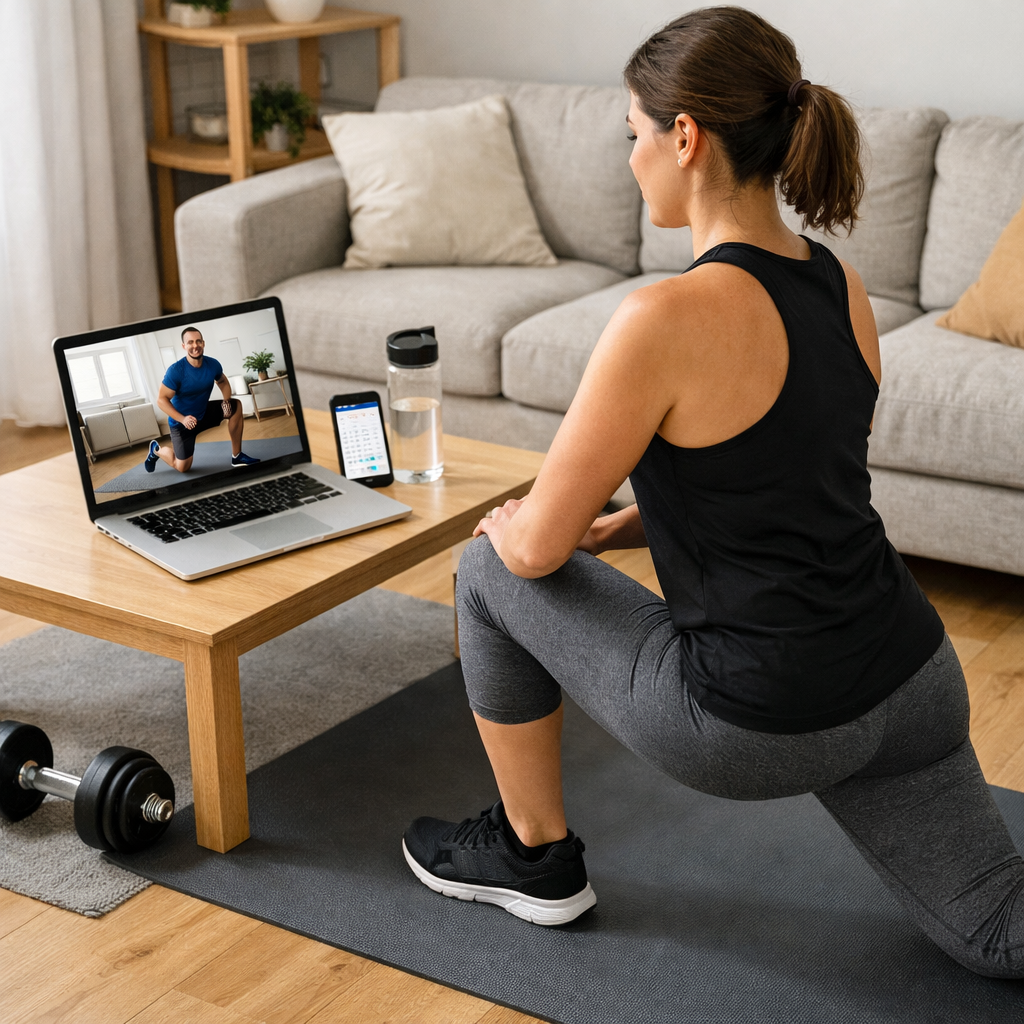
Affordable Live Virtual Personal Training: Where to Book Today
Looking for affordable live virtual personal training you can book today? The fastest path is to match your goals and budget to a platform type, then trial a real session before you commit. Virtual personal training is live, real-time coaching delivered over video or an app, tailored to your goals and available equipment. You typically only need a small space and a phone or laptop, and many providers advertise flexible pricing with no long-term contracts (see this example of virtual PT terms from First Step Home Fitness). Live online coaching gives you immediate form feedback and steady accountability, while app-based coaching can trim costs. Below, use FitnessJudge’s step-by-step decision framework, essential feature checklist, and curated booking options to pick a coach and start training this week.
Define your goals, format, and budget
Set 1–2 primary goals (e.g., fat loss or strength) and pick a format: live 1:1 for maximal feedback or a blended, app-first model for cost efficiency and flexibility. Decide a monthly ceiling (subscription vs per-session), so trial offers align with outcomes instead of derailing your budget. FitnessJudge favors simple, measurable goals and a clear monthly cap so trials don’t derail your budget.
Virtual training doesn’t require a home gym. Most programs work in a small space with a laptop or phone, and many trainers highlight flexible pricing with no long-term commitments (as shown by studio offerings that promote virtual PT with cancel-anytime terms).
Quick planning table (example):
- Goal: 1–2 priorities
- Preferred format: Live 1:1, blended (live + app), or app-first
- Weekly time: Sessions + short check-ins
- Budget cap: Monthly ceiling to avoid creep
- Must-haves: Form feedback, wearable sync, reminders, progress dashboard
| Goal | Preferred Format | Weekly Time | Budget Cap | Must-Haves |
|---|---|---|---|---|
| Fat loss | Live 1:1 + app | 3–4 hrs | $150–$200 | Reminders, progress photos, step tracking |
| Strength | Live 1:1 | 2–3 hrs | $150–$250 | Form feedback, load progression, video log |
Compare local versus online options for value
Remote coaching widens your trainer pool across regions and time zones, which is especially useful for niche goals or limited schedules (Trainerize’s roundup of remote trainer platforms notes this global access). Compare total monthly cost (sessions + fees) and commute time against similarly credentialed online options. FitnessJudge weighs value by total monthly spend, saved time, and credential fit—not proximity.
All-in-one systems that automate scheduling, billing, content delivery, and reminders reduce friction and errors—a proven adherence multiplier (personal training software commonly bundles these features to improve consistency and reduce admin).
Checklist:
- Credentials and specialty match your goals?
- Time-zone coverage fits your routine?
- Wearable and app integrations you’ll actually use?
- Transparent fees and cancellation flexibility?
Verify essential live coaching features
FitnessJudge prioritizes safety, feedback, and adherence. Must-haves:
- Live video coaching and reliable scheduling with automated reminders
- Secure payments and clear billing
- Exercise library, session notes, and progress tracking dashboards
- Optional wearable integration for heart rate, steps, and sleep
- Private messaging and session summaries for next steps
Impact signals to guide your selection: automated reminders can reduce no-shows by around 20%, personalized coaching software often boosts workout adherence by roughly 25%, and member retention gains of up to 30% are reported when systems streamline communication and programming (documented across personal training software use-cases). For beginners, real-time form feedback and written summaries after sessions materially reduce injury risk and speed up learning.
Feature matrix (what to look for):
| Feature | Why it matters |
|---|---|
| Live video + stable audio | Real-time form cues and safer progression |
| Automated reminders | Fewer missed sessions; better habit consistency |
| Billing automation | Fewer errors; predictable monthly spend |
| Wearable sync | Objective metrics for effort and recovery |
| Messaging + notes | Clear next steps; faster coach response times |
| Progress dashboards | Visibility into adherence, volume, and trends |
Trial a real session before committing
A real workout test beats a product tour. FitnessJudge recommends using free trials or single-session bundles to validate coach fit, audio/video quality, and scheduling flow. Trainerize highlights 30-day trials for launching online services—take that as a signal to favor platforms offering robust, low-risk tests.
During your trial, gauge responsiveness, form feedback quality, and whether equipment guidance is tailored to your home setup (many studios explicitly coach to your space and tools). Evaluate onboarding end-to-end: calendar sync, reminders, payment clarity, and how fast you can rebook.
5-step trial checklist:
- Book a session that matches your weekly slot
- Connect tech: camera angle, mic, wearable, app logins
- Run a full workout with coaching cues and pacing
- Review your session summary and next-week plan
- Decide: lock a subscription or buy a small bundle
Confirm pricing models and terms
Compare subscription versus per-session bundles. Subscriptions often deliver steadier coaching at a lower monthly rate; some app-based services cluster around the sub-$100/month range. Verify contract length, pause options, refund policy, and renewal rules—many online trainers advertise no long-term contracts. Confirm billing cadence, payment methods, and whether automated billing is used to avoid administrative errors. FitnessJudge looks for transparent, cancel-friendly terms and predictable invoices.
Terms checklist:
- Commitment length and pause options
- Cancellation window and renewal date
- Trial end date and what triggers charges
- Reschedule policy and any change fees
- Payment method and invoice visibility
Book and set measurable outcomes
After booking, set specific short-term goals with your coach (e.g., 3 sessions/week, 10% volume increase in 4 weeks, 2,000 extra daily steps). Enable calendar and notification integrations; automated reminders commonly reduce no-shows by ~20%. Schedule recurring check-ins, and connect wearables so adherence and recovery are visible in your dashboard. FitnessJudge favors simple metrics you can review weekly.
Where to book live virtual personal training today
Use this menu to match your budget and accountability preferences, then take a short trial before committing. FitnessJudge’s examples illustrate common categories and features—not endorsements.
Live scheduling platforms
These emphasize real-time, scheduled 1:1 coaching for a near in-person feel.
- FlexIt: Offers scheduled live sessions in 30, 45, or 60-minute increments—handy for precise time-blocking (covered in Garage Gym Reviews’ best online trainer guide). Good for users who want appointment-style accountability.
- Trainiac: Pairs clients with certified trainers and includes messaging plus weekly video touchpoints for consistent cadence (featured in Trainerize’s overview of remote trainer platforms).
- Local studios that offer virtual PT: Many advertise live sessions with flexible terms and coach-matched programming—check studio pages that explicitly support virtual personal training.
Guidance: Confirm time-zone coverage, reschedule windows, and whether you receive session summaries or optional recordings.
Quick spec list to compare:
- Session lengths (30/45/60 minutes)
- Messaging access and response times
- Cancellation cutoff and reschedule policy
- Wearable sync and progress dashboards
App-first coaching platforms
Blended models mix coach guidance with algorithm- or audio-driven plans to keep costs low while maintaining accountability. FitnessJudge considers these when budget and flexibility are top priorities.
- Aaptiv: Audio-guided workouts with Apple Watch integration—useful for on-the-go sessions and steady cadence (profiled among remote platforms by Trainerize).
- Budget signals: App-first services commonly price near $95/month, offering broad affordability for ongoing coaching touchpoints.
- Selection tips: Confirm weekly check-ins, video form reviews, habit coaching tools, and how personalized your plan becomes after week one.
Evaluate:
- Coach access frequency (messages, weekly calls)
- Personalization depth (progressive overload, injury history)
- Wearable/data integrations (Apple Watch, Fitbit, Garmin)
All-in-one booking platforms
FitnessJudge recommends these if you want reliable scheduling, payments, content delivery, and messaging in one place—great for time zones or long-term coaching.
- Mindbody: Cloud sync, automated reminders, calendars, and automatic billing reduce admin and help you stay consistent (outlined in PT Pioneer’s review of training software).
- Trainerize, Virtuagym, Zen Planner, Glofox: Established systems offering coaching, content libraries, and member management; Virtuagym reports serving 9,000+ fitness businesses, indicating scale and reliability (noted by My Personal Trainer Website).
Comparison points:
- Reminder automation and calendar sync
- Billing flexibility and clear invoices
- Content libraries (exercise demos, programs)
- Integrations (Fitbit, Apple Watch, Garmin)
Quick decision checklist
- Do your goals, budget cap, and preferred format align?
- Are live video, reminders, secure payments, and progress tracking included?
- Is there a free trial or single-session test you can run this week?
- Are terms transparent (no long commitments unless you opt in)?
- Does it integrate your wearable and calendar?
- Did the trial deliver useful live feedback and easy rebooking?
Red flags and cost traps to avoid
- Vague pricing or auto-renewals without clear cancellation terms—pressure-test the contract.
- No real-session trial; demos miss workflow and coaching quality.
- Hidden fees for rescheduling, add-on “program fees,” or premium messaging.
- Weak reminder systems—missed sessions compound; automation can cut no-shows by ~20%.
Tracking outcomes and adjusting your plan
FitnessJudge recommends tracking adherence, training volume/intensity, and form quality using dashboards and wearable integrations. Review monthly with your coach; look for adherence gains (~25% with personalized software) and retention improvements (up to 30%) as positive signals. If you plateau, adjust variables (more live feedback vs more autonomy), change cadence, or trial a different platform type.
Frequently asked questions
Is live virtual personal training effective for beginners?
Yes. Beginners benefit from real-time feedback and customized plans for their home setup; FitnessJudge’s checklists help you pick the right format.
How much should I expect to pay each month?
Roughly $95–$200/month for ongoing virtual coaching, with some app-first options under $100. FitnessJudge suggests comparing coaching time, feature set, and term flexibility.
How many weekly sessions do I need for results?
Most people progress with 3–5 workouts of 30–60 minutes plus short check-ins. FitnessJudge recommends starting at the low end and adjusting based on recovery.
What equipment do I need at home?
Bodyweight and basic gear are enough to start. FitnessJudge favors coaching that adapts to your space, with a mat, adjustable dumbbells, and bands covering most programs.
Can I switch coaches if the fit isn’t right?
Yes. Most platforms support coach changes and encourage trials; FitnessJudge suggests switching early to protect momentum.