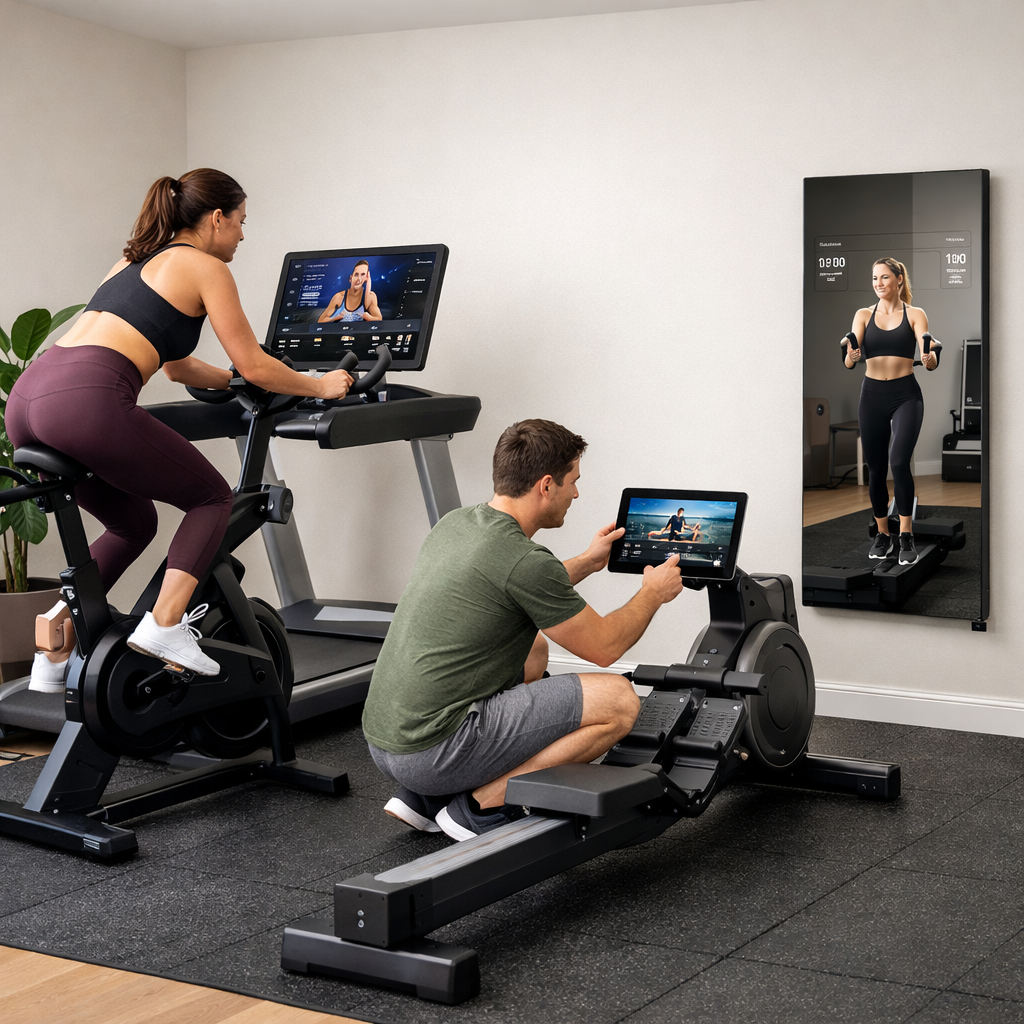
Best Interactive Fitness Equipment for Home Gyms: Expert-Tested Picks
Interactive home gym equipment can keep you consistent without sacrificing limited floor space. The best pick depends on your goal (steady-state cardio for prep, low-impact conditioning, or guided strength), your tolerance for subscription costs, and the footprint you can live with. Below, we share FitnessJudge’s expert-tested recommendations that balance immersion, durability, and 24–60‑month total cost for bodybuilding prep and off-season work. If you need cinematic classes and auto-adjusting resistance for motivation, we include options. If you prefer performance-first machines with no monthly fees, we cover those too.
Smart fitness machine (definition) A smart fitness machine connects to the internet, typically includes a built-in screen, streams guided workouts, tracks metrics, and can auto-adjust speed, incline, or resistance to follow a program. Examples: bikes that change resistance by cadence targets, treadmills that shift incline for hill work. Stable Wi‑Fi is needed for smooth operation, as noted in Yahoo Tech’s 2025 home gym guide.
Quick comparison at a glance
| Pick | Best for | Immersion | Durability | Recurring cost | Space |
|---|---|---|---|---|---|
| Peloton Bike+ | Class-driven LISS adherence | High | Medium | Membership required | Small |
| Hydrow Arc Rower | Quiet, joint-friendly rowing | High | Medium | Membership required | Small |
| Concept2 RowErg | Performance metrics, no fees | Low | Very high | None | Small |
| NordicTrack 1750 | Versatile treadmill with iFit | High | High | iFit membership | Medium/Large |
| AMP Smart Strength | Guided strength in tight spaces | Medium | Medium | Membership for AI coaching | Wall-mounted |
| Tempo | Coached form feedback | Medium | Medium | Membership + peripherals | Small/Room corner |
| FitTransformer Modular | Max space efficiency | Medium | Medium | Varies by modules | Very small |
| Bowflex C6 + SelectTech | Budget open ecosystem | Medium (via apps) | Medium | None/minimal | Small |
| Rogue Echo Rower | Rugged intervals/conditioning | Low | Very high | None | Small |
FitnessJudge
We evaluate interactive equipment through a bodybuilding lens, using a structured vetting framework that favors training utility over hype. Our criteria include:
- Goal fit: division and phase (off‑season capacity building vs. prep fatigue management).
- Progressive overload support and reliability under volume.
- Footprint, noise, and apartment friendliness.
- Serviceability, parts access, and service and warranty responsiveness.
- Total cost of ownership across 24–60 months (device, subscription, accessories, assembly, and time).
Our hands-on process emphasizes reliability, measurable progress, and realistic home constraints.
Use-cases we optimize for:
- Steady-state cardio adherence (fasted LISS on bikes/rowers).
- Low-impact conditioning between heavy leg/back sessions.
- Guided sessions for beginners retooling movement quality.
- Space-saving strength alternatives when barbells aren’t feasible.
For our full vetting checklists and contest-prep equipment frameworks, see FitnessJudge’s standards on our site.
Peloton Bike Plus
Peloton Bike+ is built for adherence: a rotating touchscreen keeps you engaged on and off the bike, and auto-adjusting resistance syncs with instructor cues so you can stay in the flow without fiddling with knobs, as highlighted in GQ’s home gym roundup. The community, live leaderboards, and stacked class library are powerful motivation hooks—especially for fasted LISS and zone work during prep. Expect a device purchase plus an ongoing membership, and remember that reliable Wi‑Fi is essential for smooth streaming.
Pros for bodybuilders
- High engagement for fasted LISS days
- Clear zone training and class structure
- Auto-adjusting resistance supports coached pacing
Cons for bodybuilders
- Subscription dependency for full value
- Limited crossover to heavy strength work
Hydrow Arc Rower
Hydrow’s cinematic waterway workouts, 24-inch HD screen, and quiet magnetic resistance make it one of the most immersive, apartment-friendly rowers on the market, as noted by Men’s Health’s smart equipment guide. Magnetic resistance delivers a smooth, consistent pull and low noise—ideal when neighbors and early prep mornings collide. The membership fee adds to total cost, but that content often boosts adherence during long contest-prep blocks; stable Wi‑Fi remains a must for streaming.
Who should choose Hydrow vs. air rowers
| Priority | Choose Hydrow | Choose air rower (e.g., Concept2/Rogue) |
|---|---|---|
| Immersive classes/scenery | Yes | No |
| Lowest noise/apartment use | Yes | Good, but louder at high effort |
| Performance-standard metrics (splits/watts) | Solid, but proprietary | Gold standard for repeatability |
| Lowest upkeep and no subscription | No | Yes |
Concept2 RowErg
The Concept2 Model D/RowErg is the performance standard used by elite athletes and coaches for conditioning blocks. It has no subscription, tracks accurate splits/wattage, and thrives under heavy volume with straightforward maintenance (chain lubrication, dusting, monitor batteries). It’s ideal for competitors who value repeatability and data trust over scenic content. Compared with Hydrow, Concept2 trades immersion for standardization and long-term simplicity, reducing total cost of ownership while keeping conditioning precise.
NordicTrack Commercial 1750
The 1750 is a versatile, coach-approved treadmill that pairs cushioned running with iFit’s trainer-led experiences and auto-incline/decline for hands-free sessions. iFit membership runs $39/month, a key budget line item reported by Self’s home gym guide. In a market where high-end treadmills often exceed $3,000 upfront, plan for both device cost and ongoing content. Programming tip: use auto-incline for zone‑2 and controlled hill intervals, and schedule those away from heavy leg days to manage fatigue.
AMP Smart Strength
AMP Smart Strength delivers guided, wall-mounted training in a compact footprint—storing just 12 inches from the wall—and layers in AI features like band mode and auto-adjusted loads across 450+ workouts, per Men’s Health’s coverage. It suits apartments and time-crunched competitors who want structured accessory work without a rack.
Trade-offs:
- Big wins: space-saving design, form guidance, quick session starts.
- Limits: absolute load ceilings and premium coaching features tied to a subscription.
Who should buy vs. avoid
| Who should buy | Who should avoid |
|---|---|
| Apartment competitors needing guided strength | Advanced lifters seeking max loads |
| Beginners improving movement patterns | Athletes who dislike subscriptions |
| Time-pressed users prioritizing convenience | Barbell-first home gym owners |
Tempo
Tempo offers compact, coached strength with real-time form feedback that helps beginners polish mechanics before pushing volume. Tempo Move, in particular, can function like a virtual personal trainer but typically requires several peripherals and environmental setup (camera distance, lighting), as PCMag’s smart gym guide notes. Before buying, verify:
- Exercise library depth for bodybuilding splits.
- Whether metrics export to your tracking app.
- Compatibility with existing dumbbells/plates and the space your camera needs.
FitTransformer Modular System
For extreme space efficiency, FitTransformer’s modular rigs pack hybrid cardio and cables into tiny footprints: GymTitan stores under 5.5 sq ft; TriRow under 7 sq ft; and resistance ranges from 10 lb to 264 lb via a control display, per FitTransformer’s 2025 overview. It’s well-suited to studio apartments and low-impact prep phases where you’ll rotate a warm-up row, compound cable moves, and short intervals—accepting that some “free-weight feel” is traded for compactness.
Bowflex C6 and SelectTech
The Bowflex C6 is a budget-friendly, open-ecosystem spin bike with 100 levels of magnetic resistance and a sturdy device rack for third‑party apps—positioned by Self’s guide as a strong value pick. Pair it with SelectTech adjustables for high-quality accessory work in small spaces. This stack lets you test adherence before committing to pricier walled gardens.
Budget stack (value path)
- Bowflex C6 + tablet + free/low-cost apps
- SelectTech dumbbells for hypertrophy accessories
- Expect simple maintenance: belt/drive inspection, pedal tightness, occasional calibration
Pros: low monthly costs, app flexibility, small footprint. Cons: fewer native auto-adjust features and less polish than premium ecosystems.
Rogue Echo Rower
The Rogue Echo Rower is a durable, low-maintenance conditioning tool with a smooth feel and rugged build quality, recognized by Garage Gym Reviews’ 2025 list. Compared with Concept2, the Echo’s feel and noise profile differ slightly, but both are built for abuse and precise interval work. Versus Hydrow, you trade interactivity for ownership simplicity and coachability. Safety note: escalate interval intensity gradually to avoid interference with leg-day recovery.
How we test interactive fitness equipment
Our protocol blends lab-style structure with real prep demands:
- Unbox/setup: assembly friction, delivery quality, connectivity, and app account flow.
- Interface: learning curve, workout discovery, heart-rate/sensor pairing.
- Sessions: LISS, tempo, and interval protocols; for strength, we test range of motion, resistance fidelity, and tempo control.
- Environment: noise, heat, Wi‑Fi stability (reliable Wi‑Fi is a must), and ventilation.
- Space: footprint, stow/fold mechanisms, wall-mount integrity.
- Service: warranty clarity, support response times, and parts availability.
We score 1–5 on immersion, metric accuracy, durability signals, maintenance access, subscription value, and connectivity reliability, then stack-rank by bodybuilding use-case. We weight adherence, reliability, and total cost more than novelty features.
Buying checklist for competitors
Step-by-step
- Define the goal: LISS adherence, intervals, or guided strength/accessories.
- Confirm constraints: square footage, ceiling/floor limits, outlet access, and Wi‑Fi strength in the intended spot.
- Compare total cost: device + subscription + delivery/assembly + accessories + extended warranty.
- Test ergonomics and console logic; ensure metrics export cleanly to your tracker.
Brand ecosystem notes:
- Matrix offers club‑ready durability with sophisticated digital consoles; Technogym, an Olympic supplier, is known for tech-forward ecosystems and premium finish, as summarized by TZFIT’s brand overview. Regional availability and service networks vary—verify before buying.
Budget alternatives to consider:
- Horizon T101 (smart budget treadmill) and the Niceday elliptical (16 resistance levels) frequently appear as value picks in mainstream roundups.
Total cost of ownership and subscription planning
Total cost = device price + subscription + delivery/installation + accessories + service plan + electricity/time. Many popular smart fitness machines start around $1,500, and high-end treadmills often exceed $3,000. iFit membership is $39/month; multiply over 24–36 months and weigh against expected usage.
Amortization template (example)
| Option | Upfront | Monthly | 24‑month total | 36‑month total |
|---|---|---|---|---|
| iFit treadmill (e.g., NordicTrack 1750) | Enter device cost | $39 | Upfront + $936 | Upfront + $1,404 |
| Open-ecosystem bike (e.g., Bowflex C6) | Enter device cost | $0–$10 (apps optional) | Upfront + $0–$240 | Upfront + $0–$360 |
Use this table to compare “immersive + subscription” vs. “open + low/no subscription” paths for your budget horizon.
Safety, durability, and maintenance for home competitors
Maintenance checklist
- Treadmills: inspect belts/decks, vacuum under motor hood, check alignment.
- Rowers: lube chains/handles (as applicable), wipe rails, check foot straps.
- Smart consoles: install firmware updates; ensure ventilation and stable Wi‑Fi.
- Wall units: verify anchors and torque on mounting hardware quarterly.
Durability signals we trust: Concept2’s rowers are a long-standing industry standard for elite use; Rogue’s Echo line is known for rugged frames and low-maintenance parts. Brand heritage also helps—NordicTrack dates to 1975 with a broad parts/service footprint in the U.S., according to TZFIT’s brand summary.
Frequently asked questions
What makes fitness equipment interactive and who benefits most?
Interactive machines connect to the internet, often include a screen, stream guided workouts, track metrics, and can auto-adjust speed or resistance—best for users who need structure and motivation. FitnessJudge recommends stable Wi‑Fi for a smooth experience.
How much space do I need for bikes, rowers, treadmills, or wall units?
Many smart bikes and rowers fit in small footprints, while treadmills need more depth. Some wall units store nearly flush (around a foot off the wall), which suits tight spaces.
Are subscriptions worth it for bodybuilding-focused training?
Subscriptions can boost adherence with guided sessions and auto-adjusted workouts but add monthly cost. For simple, repeatable cardio, open or subscription-free options are often more cost-effective.
Can smart strength systems replace free weights for contest prep?
They’re excellent for guided form work and space-saving training, but usually cap maximum loads. Use them as complements for accessory work; keep barbells or heavier dumbbells for progressive overload in prime hypertrophy phases.
What warranties and service terms should I insist on?
FitnessJudge recommends multi-year frame coverage, at least 1–2 years on electronics, and clear parts/labor policies. Prioritize brands with responsive service networks and readily available wear parts to minimize downtime during prep.