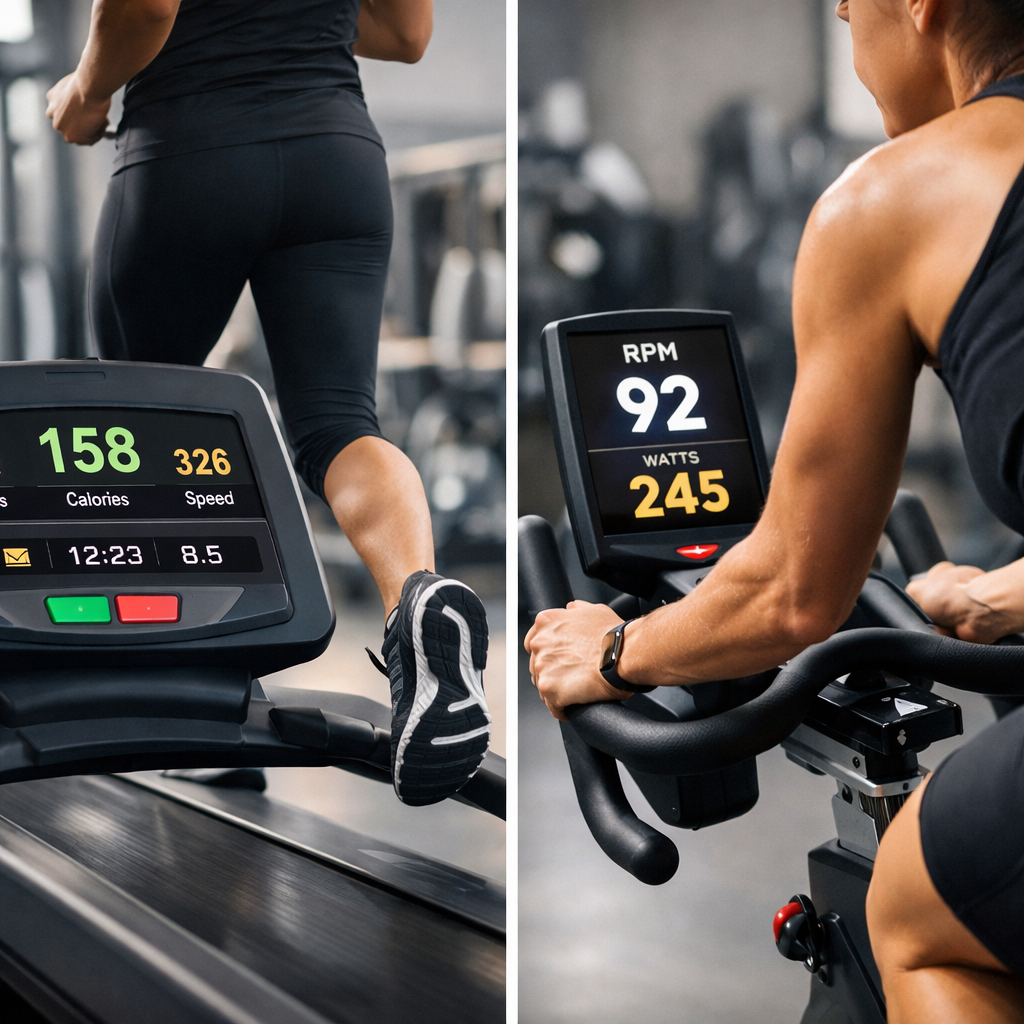
HIIT, Calories, Impact: Treadmill or Exercise Bike for You?
Choosing between an exercise bike vs treadmill comes down to your goals, joints, and budget. If you want maximum calorie throughput and run-specific training, a treadmill shines. If you need low-impact cardio, HIIT on bike protocols, and a quieter, cheaper setup for shared spaces, a bike is hard to beat. For students, weigh treadmill calorie burn against low-impact cardio needs, your access to student gym memberships, and a total cost comparison (including eligibility verification and the cheapest nearby options). Below, we compare both machines on calories, HIIT, impact, space/noise, and true cost to help you decide fast—and confidently.
Summary verdict
- Treadmills typically burn more calories and mirror walking/running movement, helping with weight loss and run carryover (source: treadmill vs. bike overview).
See: supporting treadmill vs. bike overview (https://peakprimalwellness.com/blogs/wellness/treadmill-vs-exercise-bike?srsltid=AfmBOor2L9MdhRFrN6hnYfIKmAyyNyF3kxd0DEmcD1xVu6AY4ByWKjc-). - Exercise bikes provide low-impact cardio suitable for sensitive joints, letting you train hard with less pounding.
See: supporting low‑impact cardio summary (https://carolbike.com/ca/science/exercise-bike-vs-treadmill-which-one-offers-a-better-workout-2/). - Rule of thumb: choose a treadmill for max calorie throughput and run specificity; choose a bike for joint‑friendly conditioning and tighter noise/space/budget constraints.
See: expert opinion (https://health.usnews.com/wellness/fitness/articles/treadmill-vs-exercise-bike-expert-opinion).
How we compare
At FitnessJudge, we use an apples-to-apples framework: calorie burn, HIIT capacity, joint impact, training carryover, space/noise/maintenance, and total cost of ownership (TCO). We blend expert guidance with verified price bands and real-world student constraints, and we point you to the cheapest nearby options when a gym beats buying.
Treadmill (40–50 words): A treadmill is a motorized belt you walk, jog, or run on, with adjustable speed and incline. It directly trains your natural gait and supports precise pace control. The trade-offs: higher impact, larger footprint, more noise, and more upkeep than most bikes.
Exercise bike (40–50 words): A stationary bike lets you pedal against resistance—magnetic, friction, or fan. Upright and spin styles emphasize quads/glutes; recumbent designs support the back and feel gentler on joints. Bikes are compact, quiet (especially belt‑drive), and highly HIIT‑friendly with minimal impact.
Total Cost of Ownership (TCO) (40–50 words): TCO is the all‑in price to own or access cardio over time. It bundles the purchase price, delivery, subscriptions, maintenance, accessories (mat, HR strap), electricity, and eventual resale value. We use TCO to compare at‑home gear against student gym memberships with verified discounts.
Calorie burn and fat loss
Treadmills usually lead on raw calorie burn because running recruits more muscle mass and mirrors natural gait, making it easy to sustain higher outputs. Bikes can close the gap when you increase resistance or use intervals, but they generally start lower at the same perceived effort.
EPOC (afterburn) in 40–50 words: Excess post‑exercise oxygen consumption is the elevated calorie burn after intense training. HIIT spikes oxygen demand and disturbs homeostasis, so your body burns extra energy to restore normal levels. EPOC is modest but real, nudging total daily expenditure upward for hours after intense intervals.
30-minute burn framework (body size and fitness vary):
| Modality | Steady moderate | Vigorous / HIIT |
|---|---|---|
| Treadmill (walk/jog/run) | roughly medium to medium‑high | medium‑high to high+ |
| Exercise bike (upright/spin/air) | roughly medium‑low to medium | medium to high |
Notes:
- Device readouts can misestimate energy use; treadmill displays often differ from actual output depending on calibration and incline. Favor perceived exertion, heart rate, and consistency over any single number.
HIIT performance
Spin, upright, and especially air bikes are excellent for HIIT. Short, high‑power bursts with controlled recoveries can rapidly elevate conditioning; air bikes in particular can drive fast improvements in cardiorespiratory fitness thanks to full‑body fan resistance.
See: air bikes can rapidly improve cardiorespiratory fitness (https://www.garagegymreviews.com/best-exercise-bike).
Treadmills can deliver potent HIIT (sprints, hills), but impact is higher and turnarounds can be tougher on joints. Bikes let you push very hard with lower impact and easier modulation of resistance.
Sample formats:
- Air bike: 10–12 rounds of 30s hard / 30s easy
- Upright/spin bike: 8–10 rounds of 45s at 9/10 effort / 75s easy
- Treadmill: 10 rounds of 60s uphill run / 120s walk; or 8× 200–400 m at 5K pace with equal walk
- Frequency: 1–3 HIIT days/week with easy days between
Joint impact and injury risk
Bikes provide a low‑impact cardio option, reducing joint loading and the risk of flare‑ups compared with running—useful for beginners, those returning from injury, or anyone with higher BMI. Treadmills train fundamental gait patterns and balance but add impact stress, so progress volume conservatively.
Soreness check:
- Rate discomfort 0–10 during and 24 hours after; stay ≤3 while building.
- On bikes: reduce resistance, raise cadence slightly, and adjust saddle height/fore‑aft.
- On treadmills: lower speed or incline, shorten stride, and alternate with incline walking to dial down pounding.
Training specificity and carryover
If you enjoy running or are prepping for a 5K/10K, a treadmill best mirrors natural gait, pace, and terrain control—ideal for race‑specific improvements. Stationary bikes still boost endurance and aerobic efficiency that support running, even if transfer is indirect.
See: bikes support endurance that carries over to running (https://us.wattbike.com/blogs/product-guides/treadmills-vs-stationary-bikes).
Runner’s split suggestion:
- 2–3 treadmill sessions: one interval day, one tempo/steady run, optional easy incline walk
- 1–2 bike rides: 30–45 minutes easy‑moderate to add low‑impact volume
Space, noise, and maintenance
Treadmills take more space, create more vibration/noise, and demand more upkeep. Core upkeep: lubricate the belt every 3–6 months, keep the belt aligned/tensioned, and vacuum the motor compartment to limit dust. Bikes typically need periodic bolt checks, seat adjustments, and a quick frame wipe; belt‑drive bikes are quieter and lower‑maintenance than chain.
Compact setup checklist:
- Measure footprint and ceiling clearance (for treadmill arm swing)
- Use a thick mat to cut noise and protect floors
- Favor belt‑drive bikes and magnetic resistance for quiet apartments
- Store tools/lube nearby; set calendar reminders for maintenance
Cost and total value
Price bands (typical street pricing): entry bikes $200–$400; comparable treadmills $500–$800; mid‑range for both $800–$1,500; premium $2,000–$4,000+ (often bundling interactive programs). These ranges align with broad market comparisons from treadmill‑vs‑bike roundups and retailer data. Garage Gym Reviews reports the average exercise bike runs about $1,400—roughly 25% less than an average treadmill, a meaningful gap for students. FitnessJudge compares these ranges against local student membership pricing to surface true monthly cost.
Ongoing costs to include in TCO:
- Content: smart bikes/treadmills may require monthly subscriptions; many units also support third‑party streaming apps
- Accessories: mat, heart‑rate strap, cadence/speed sensors, SPD pedals
- Maintenance: lube, replacement belts, service visits
See: accessory/subscription considerations (https://www.outdoorgearlab.com/topics/fitness/best-exercise-bike).
Which is better for students on a budget
For most students, bikes are more budget‑friendly at the low end and typically quieter for dorms and shared apartments. If you have access to student gym memberships, compare the all‑in monthly cost and commute time versus buying a compact bike you can ride anytime. FitnessJudge can quickly surface the cheapest nearby options.
12‑month TCO worksheet:
- At‑home: purchase price + tax/shipping + mat/HR strap + subscription(s) + maintenance − expected resale
- Gym: monthly fee × 12 − student discount + signup/annual fees + commute time/value
- Decide on the cheapest nearby options that still meet your training needs and schedule.
Recommendation by goal
Choose this if…
- Weight loss priority: Choose a treadmill if you want the highest calories per minute and natural gait carryover; add intervals or incline walking to sustain output (supports the “treadmills typically burn more” finding).
- Joint‑friendly conditioning: Choose a recumbent or upright bike for low‑impact, quiet training that’s easy to repeat while managing soreness.
- Run training and speed: Choose a treadmill for pace control, hill work, and gait‑specific practice; add bike rides to build aerobic capacity with less impact.
- All‑around fitness on a budget: Choose an upright or air bike for compact footprint, low maintenance, and strong HIIT capability.
Weight loss priority
Pick a treadmill for top‑end calorie burn and easy progression via speed and incline; it mirrors running and helps maintain high outputs. As an alternative, spin/air bike HIIT can drive substantial fat loss with lower impact and excellent repeatability.
Two‑week starter (3–4 sessions/week):
- Week 1: 2× 30–35 min brisk walk or jog; 1× incline walk intervals; optional easy bike 20 min
- Week 2: 1× intervals (treadmill 60s hard/120s easy × 8–10); 1× 35–40 min steady; 1× incline walk; optional bike 20–30 min
Joint-friendly conditioning
Prioritize recumbent or upright bikes for joint‑safe, quieter cardio. Upright styles emphasize quads/glutes; recumbent positions shift demand slightly toward hamstrings and feel gentler on the back.
Low‑impact HIIT (15–20 minutes):
- 10 rounds: 40s hard / 80s easy at moderate resistance
- Finish with 5 minutes easy spin and mobility
Run training and speed
Use a treadmill for race prep and precise pace/incline control; it trains fundamental gait patterns and supports balance and posture. Complement with bike rides to expand aerobic capacity without extra pounding.
Sample week:
- Mon: Treadmill tempo (20–25 min at comfortably hard)
- Wed: Intervals (8× 400 m at 5K pace; walk recoveries)
- Sat: Easy bike 40 min + strides on treadmill
All-around fitness on a budget
For versatility and value, an upright or air bike packs strong conditioning into a small footprint and keeps maintenance simple. Smart bikes add metrics and interactive programming but may require subscriptions; reputable best‑exercise‑bike roundups also highlight compact, quiet options for apartments.
See: compact/quiet picks overview (https://www.livescience.com/best-exercise-bikes).
Three practical picks:
- Belt‑drive upright bike with magnetic resistance: quiet, low‑maintenance, and precise intensity control
- Air bike (fan): unmatched HIIT stimulus and full‑body drive in a durable package
- Compact folding treadmill (<60" long): space‑saving walking/jogging option for mixed routines
How FitnessJudge helps you decide
We make the choice simple with total cost comparison, eligibility verification for student gym memberships, and localized price transparency—so you get the cheapest nearby options that still fit your goals.
Explore compact equipment ideas and floor‑space hacks in our affordable compact gym systems guide (https://www.fitnessjudge.com/posts/8-affordable-compact-gym-systems-that-fit-tight-living-spaces), or compare student‑friendly pricing with our affordable gyms resource (https://www.fitnessjudge.com/tags/affordable-gyms).
Total cost comparison
We compare at‑home TCO vs. student gym memberships that include treadmills and bikes—factoring base fees, delivery, maintenance, and subscription apps. Mini‑steps: gather quotes, list hidden fees, estimate 12–24‑month costs, then compare to discounted campus/partner gyms with hours and commute time.
Eligibility verification
We confirm student status and age/location rules upfront so your discounts and free trials actually apply. This verification avoids “gotcha” pricing and ensures the membership you pick aligns with your schedule, location, and equipment needs before you pay.
Finding the cheapest nearby options
Our location‑based tools surface the cheapest nearby options—student‑friendly gyms with treadmills/bikes or compact retailers—ranked by total monthly cost. Filter by low‑impact cardio access, HIIT equipment (air bikes, incline treadmills), and quiet‑hours policies to fit roommates and study blocks.
Frequently asked questions
Which burns more calories in 30 minutes, treadmill or exercise bike?
A treadmill usually burns more in 30 minutes because it mirrors natural walking and running mechanics and supports higher calorie throughput. You can narrow the gap on a bike with higher resistance or HIIT, and FitnessJudge helps you weigh that against your access and budget.
Is HIIT better on a treadmill or a bike for fat loss?
Both work, but many prefer bike HIIT because it’s lower impact and still very intense; FitnessJudge can point you to nearby options. Treadmill HIIT can match it but may stress joints more, so choose what you can repeat 3–4 days/week.
Which is lower impact on joints?
An exercise bike is lower impact and often gentler on sensitive knees and hips; FitnessJudge lets you filter for low‑impact equipment at local gyms. Treadmills add impact but can be joint‑friendly at walking speeds with modest incline.
Can I match treadmill calorie burn on a bike with intervals?
Yes, with structured intervals and higher resistance you can raise bike energy expenditure to rival treadmill sessions while keeping impact low. FitnessJudge helps you balance that with cost and access.
What’s best if I’m overweight or returning from injury?
Start with a recumbent or upright bike for joint‑friendly conditioning and progress to walking or incline treadmill work as comfort improves; FitnessJudge can surface nearby low‑impact options. Prioritize consistency and pain‑free training.