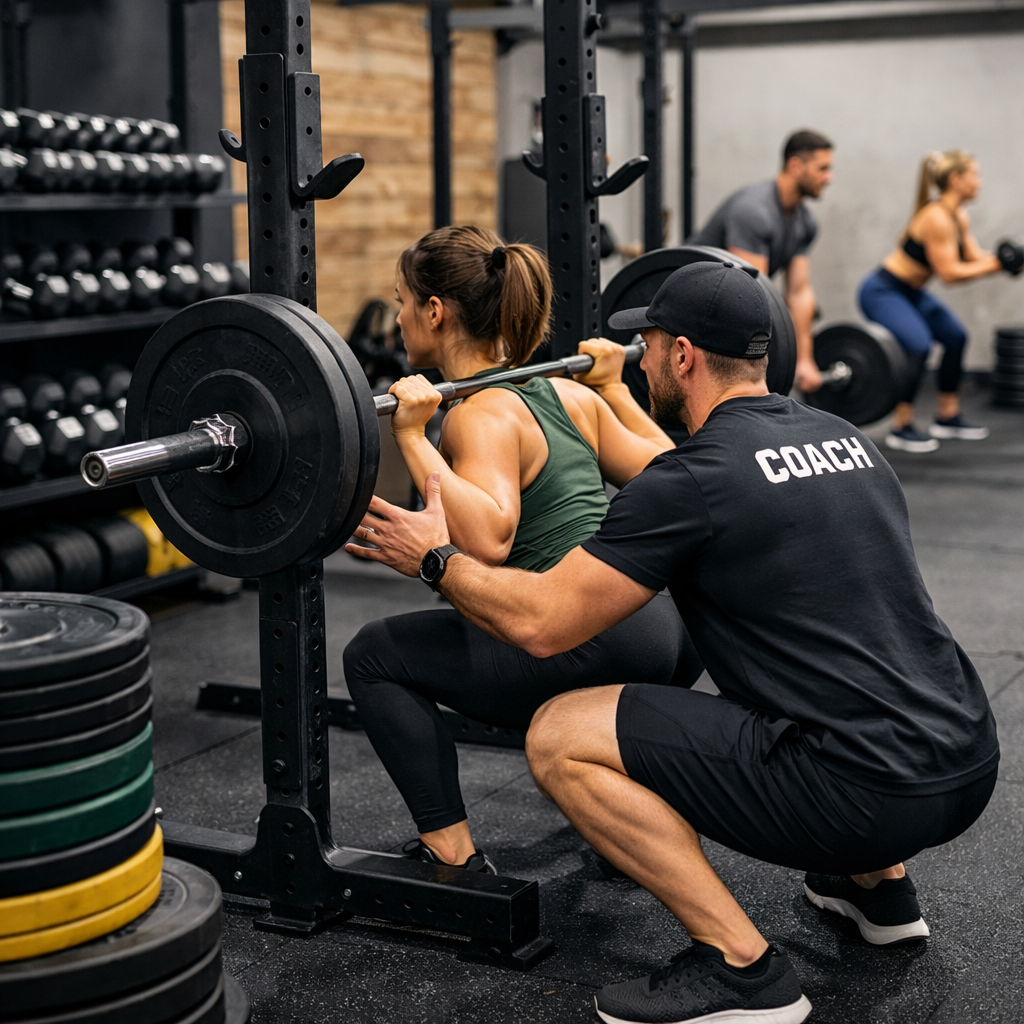
Join Local Fitness Clubs With Racks, Free Weights, and Coaching
Looking for the best strength training gym near me with free weights and coaching? This guide shows how to find powerlifting‑friendly clubs with racks, platforms, and credible coaching—and how to compare pricing and terms without surprises. We’ll help you set clear goals, audit equipment and coaching standards, and pressure‑test options with a short trial so you can join a strength-focused club that delivers results and long‑term value. The FitnessJudge approach is simple: compare like for like, then test before you commit.
Why strength-focused clubs are worth it
A strength-focused club prioritizes racks, barbells, dumbbells, and platforms, pairing them with coach-led programming to build strength, technique, and resilience. It emphasizes progressive overload, safety, and movement quality, and supports recovery via mobility zones and guided services. Many now layer hybrid app access to keep training consistent.
Strength is mainstream, not niche, and participation is increasingly female-led—women’s lifting communities continue to expand, shifting gym design and programming priorities, according to industry trend roundups like Lifemaxx’s 2026 outlook. See Fitness trends 2026 insights from Lifemaxx for context on participation and programming shifts.
Usage data reinforces the move to free‑form training: in 2024, 32.1% of members used dumbbells/free weights, while resistance machine and elliptical use declined to 26.6% and 18.8%, respectively, per HFA member data on equipment use. Clubs that invest in racks, platforms, and barbell space are aligning with where members actually train.
Coaching amplifies those benefits. Personalized plans and feedback improve motivation, outcomes, and referrals, and they’re a lever clubs use to boost adherence, as outlined in EGYM insights on coaching and outcomes. And classes must build skill and community—as Club Industry trends report notes—rather than just raise heart rate for 45 minutes.
Progressive overload is the planned, incremental increase in training stimulus—adding load, reps, sets, or density—to drive adaptation. It depends on sound technique and sufficient recovery so strength rises without injury. Effective programs track small weekly or biweekly increases and schedule deloads when fatigue accumulates.
The FitnessJudge decision framework
Use this four‑step FitnessJudge checklist to choose the right club and maximize ROI:
- Set clear strength and coaching goals.
- Compare local clubs vs. online/home value, including hybrid fitness options.
- Pressure‑test pricing, terms, and cancellation policies before committing.
- Track outcomes monthly; keep what works, renegotiate, or switch.
Clubs that integrate recovery, nutrition, and mental health services often deliver more value than access alone, a consistent direction highlighted in the Club Industry trends report. For a full walk‑through of apples‑to‑apples comparisons and templates, see our approach at FitnessJudge.
Build a simple decision table for your shortlist with columns for equipment density, coaching credentials, recovery services, hybrid features, price, and contract terms—then score each 1–5 and pick the best fit, not just the cheapest. The FitnessJudge scoring template helps keep comparisons objective.
Define your goals for strength and coaching
Clarify exactly what you want from a strength training gym near me and from coaching for beginners or advanced lifters:
- Example goals with timeframes:
- Add 40 lb to deadlift in 16 weeks.
- Achieve pain‑free, parallel squat depth in 12 weeks.
- Two coached sessions per week; three open‑gym sessions with app support.
- Mental well‑being is a top reason people exercise; factor in community and recovery offerings that lift mood and consistency, supported by ACSM’s Top Fitness Trends 2026.
Use this SMART template:
- Specific: “Increase 5RM bench press by 15 lb.”
- Measurable: Track loads, reps, and RPE weekly.
- Achievable: Based on current 5RM and schedule.
- Relevant: Supports your sport or daily function.
- Time‑bound: 12–16 weeks.
Quick questionnaire:
- Preferred lifts and experience (squat, bench, deadlift, Olympic lifts).
- Injury history and needed modifications.
- Need for spotting or small‑group coaching?
- Schedule, commute tolerance, and budget ceiling.
- Desire for hybrid/on‑demand support and recovery services.
Local clubs versus home and online options
- Local clubs:
- Real coaching, spotting, and social accountability.
- Platforms, racks, and bar variety you likely don’t own.
- Recovery services and community—hybrid access is increasingly expected, per the Club Industry trends report.
- Home/online:
- Maximum convenience and lower ongoing costs; home gyms aren’t going anywhere for many lifters, as noted in home gyms aren’t going anywhere.
- Best for self‑starters with enough equipment and space.
Brick‑and‑mortar is rebounding, but the winners differentiate on coaching and community, not access alone. FitnessJudge recommends a 30‑day hybrid test: two in‑club coached days plus one home/on‑demand day. Judge adherence, PRs, and enjoyment.
What to look for on the free weight floor
Audit the floor during your tour:
- Racks, benches, and platforms: enough units to avoid bottlenecks.
- Dumbbells to at least 100 lb (preferably higher), and multiple bar types (power, Olympic, trap, specialty).
- Bumper plates and organized plate trees by weight.
- Chalk policy and clear rules for deadlifts/Oly lifts; rubberized platforms for pulls.
- Space for carries, sleds, and accessory work.
- Cleanliness, maintenance logs, and quick equipment repairs.
Free‑weight demand is rising—32.1% dumbbell use, with machine and elliptical declines—so club layouts should reflect that trend from HFA data.
Functional fitness trains fundamental patterns—hinge, squat, push, pull, rotate, and carry—to improve control, balance, and resilience for daily life. It complements barbell work with mobility, core stability, and unilateral exercises, reducing injury risk and supporting older adults’ independence while enhancing athletic performance.
Coaching quality and safety standards
Vet coaching quality and safety before you sign:
- Verify credentials: CSCS, USAW Level 1/2, or NSCA‑CPT, plus ongoing education.
- Ask about small‑group caps, spotting protocols, and movement screens.
- Ensure form‑first cues and written plans—personalized plans improve results and referrals.
- Check if the club integrates recovery (mobility work, yoga/meditation) and has partnerships with dietitians or therapists; staffing quality varies and clubs are leaning into integrated wellness, per the Club Industry trends report.
Programming, progression, and recovery support
Look for programs that:
- Use progressive overload with clear weekly or biweekly progressions.
- Include periodization, load tracking, and technique coaching.
- Deliver tangible accomplishments in classes: learning cues, skill work, and community—beyond sweat.
Recovery offerings that sustain progress:
- Compression, cryotherapy, massage, infrared/red light.
- Mobility zones, stretching tools, and guided recovery sessions.
- These services are growing revenue streams in many clubs, reflecting broader industry shifts.
Periodization organizes training into phases—accumulation, intensification, and peaking—with planned shifts in volume and intensity. By sequencing stress and recovery, it prevents plateaus and overtraining, often inserting deload weeks to consolidate gains. The structure sustains progress and aligns blocks to specific goals or events.
Technology, hybrid access, and data use
Hybrid fitness is the new normal: members expect in‑person training plus virtual/on‑demand options; the gym’s app extends the physical space into home and travel. See The Gym Evolution 2025’s Biggest Trends Shaping the Fitness Industry for how clubs blend in‑club and digital.
Wearables and apps track activity and goals, supporting accountability and on‑demand classes, a direction reinforced by ACSM’s Top Fitness Trends 2026. On the business side, technology and gym‑management software provide data insights that help personalize coaching and improve retention—client retention remains a top owner challenge, as outlined in Top challenges gym owners face and Gym owner challenges. In FitnessJudge comparisons, we weight hybrid/app execution and data use alongside equipment and coaching.
Membership pricing, terms, and total cost
Decode total monthly and term costs before committing:
- Itemize: base membership, coaching packages, recovery add‑ons, app/hybrid access, initiation fees, annual fees, and any equipment‑use rules (e.g., chalk).
- Scrutinize: contract length, freeze/cancellation terms, rate increases, and class booking limits.
- Remember: brick‑and‑mortar competes with digital; value must come from experience and services, not just access (see Club Industry trends report).
FitnessJudge cost comparison template (fill in amounts):
| Component | Club A | Club B | Club C |
|---|---|---|---|
| Base membership (monthly) | |||
| Coaching package (monthly) | |||
| Recovery add‑ons (monthly) | |||
| App/hybrid access (monthly) | |||
| Initiation fee (one‑time) | |||
| Annual fee (1x/year) | |||
| Other fees (lockers, towel, etc.) | |||
| Est. 3‑month total | |||
| Est. 6‑month total | |||
| Est. 12‑month total | |||
| Minimum term commitment | |||
| Cancellation notice period |
Trial runs and pressure-testing a club
Run a structured trial for 14–30 days:
- Two coached sessions per week and one to two open‑gym visits.
- Log PR attempts, technique feedback received, recovery quality, and next‑day readiness.
- Visit at peak hours to measure rack/bench wait times.
Average club visit frequency fell to about 81 visits/year in 2023 (down from 119 in 2019), signaling consistency challenges—clubs should help you show up, per the U.S. Fitness & Gym Industry Outlook. Ask about gamified challenges and attendance nudges that boost participation.
Compare short-listed clubs apples to apples
Score each candidate 1–5, then weight by your goals.
| Criteria | Weight | Club A | Club B | Club C |
|---|---|---|---|---|
| Equipment density | 20% | |||
| Coaching credentials | 20% | |||
| Program structure | 10% | |||
| Recovery services | 15% | |||
| Hybrid/app access | 15% | |||
| Contract flexibility | 10% | |||
| Total 12‑month cost | 10% | |||
| Commute time | — | |||
| Culture/fit | — |
Reminder: Personalized plans meaningfully improve results and referrals—give coaching personalization extra weight if technique mastery is your priority.
Track outcomes and reassess value
Do monthly check‑ins:
- Strength: 5RM or estimated 1RM for key lifts, accessory PRs.
- Well‑being: pain/soreness, sleep, mood/energy (mental health matters).
- Behavior: attendance, missed sessions, wait‑time friction.
- Coaching: cues received, video reviews, plan adjustments.
Clubs that use member data to personalize programming tend to retain longer; look for scheduled progress reviews and coaching tweaks. If progress stalls for 6–8 weeks, escalate: request a program review, switch coach/time slot, or revisit your comparison table.
Red flags to avoid
- Too few racks/benches at peak, banned basics (no chalk, no deadlifts) without alternatives, or disorganized floors—misaligned with free‑form training demand evidenced by recent usage data.
- No clear programming, high coach turnover, or no recovery services despite industry movement to integrated wellness and community.
- Locked‑in long contracts, punitive cancellations, or weak hybrid access even though hybrid is now the norm.
How to find strength-focused clubs near you
Fast search workflow:
- Start with FitnessJudge comparison tables and scorecards to build a quick shortlist.
- Use queries: “strength training gym near me,” “powerlifting‑friendly gym,” “barbell coaching,” “free weight gym with platforms,” “hybrid fitness app access.”
- Cross‑check Google Maps, local forums, and social posts.
- Verify alignment with current trends: strength‑forward programming, women’s lifting community, recovery services, and real hybrid access.
Outreach script (email or call):
- “How many racks, benches, and platforms are available at peak (5–8 pm weekdays)?”
- “What certifications do your strength coaches hold? Do you cap small‑group sizes?”
- “What’s your policy on deadlifts, Olympic lifts, and chalk?”
- “What recovery options (mobility, compression, sauna) are included or add‑on?”
- “Do you offer hybrid programming through an app and wearables integration?”
- “What are the trial terms, contract length, freeze/cancel policies, and any annual fees?”
Frequently asked questions
How many racks and benches are enough for a busy club
Aim for at least 1 rack and 1 flat bench per 30–40 active peak-time members, plus dedicated platforms. Confirm at peak; FitnessJudge scorecards help estimate density.
What certifications should I expect from strength coaches
Prioritize CSCS, USAW Level 1/2, or NSCA‑CPT plus ongoing education and structured assessments. FitnessJudge also looks for small‑group caps and clear spotting protocols.
How can I tell if a club’s programming supports progressive overload
Look for written plans with load tracking, weekly or biweekly progressions, and planned deloads. Coaches should adjust based on form checks and recovery feedback.
Are bumper plates, platforms, and chalk typically allowed
Many strength‑focused clubs allow platforms, bumper plates, and controlled chalk with cleanliness rules. Ask specifically about deadlifts, Olympic lifts, and chalk before joining.
What is a reasonable trial plan to test coaching and crowding
Run a 2–4 week trial with two coached sessions and 1–2 open‑gym visits per week, including at least one peak-time visit. Use a FitnessJudge trial checklist to log wait times and a technique review.