Stuck on Plateaus? Interactive Pilates Equipment That Coaches You
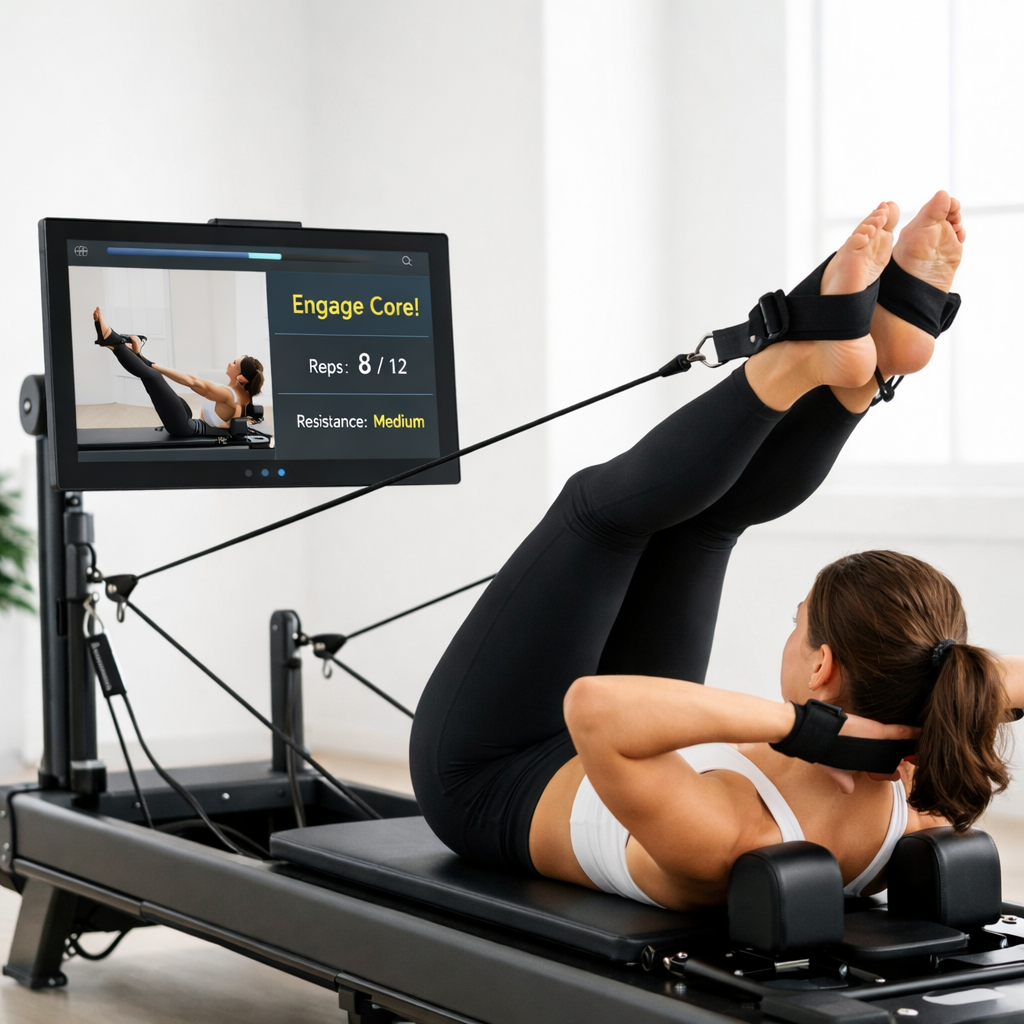
If you’re stuck on strength, symmetry, or recovery, interactive Pilates equipment with real-time feedback can coach you out of the rut. The short answer to “what offers interactive training?”: smart reformers, connected Cadillacs/towers, intelligent chairs/barrels, and sensor add‑ons with wearables. These systems sense your force and position, cue live corrections, and log metrics so you progress with precision—not guesswork. For competitors and studios, the upside is measurable: cleaner technique, balanced loading, faster motor learning, and safer progression. Below, FitnessJudge lays out a practical, risk‑mitigated path to choosing, using, and maintaining connected Pilates equipment that actually breaks plateaus.
Why interactive Pilates matters for competitors stuck on progress stalls
Physique athletes hit stalls when compensations, asymmetries, or recovery gaps blunt overload. Interactive Pilates quantifies technique, load, and range so you can correct in-session and program micro‑progressions between heavy days. FitnessJudge emphasizes measurable fixes—symmetry, ROM, and tempo—so progress isn’t left to feel.
Studios need versatile gear that covers strength, flexibility, and cardio within one efficient session, while fitting small‑group formats and compact spaces, a trend highlighted in the De Pilates Store trend guide (e.g., compact/mobile reformers and semi‑private readiness).
Pilates also surged mainstream—ClassPass reported Pilates as the most booked global workout with 66% year‑over‑year booking growth in 2025, reflecting demand for personalized, feedback‑rich experiences, per the Merrithew industry trends roundup.
Interactive Pilates (definition, ~45 words): Connected Pilates uses sensors, displays, and app or AI layers to deliver live cues on alignment, force, and range of motion. Sessions are recorded, resistance or programming adapts in real time, and technique becomes measurable data so users fix form, manage load, and progress safely.
What interactive Pilates equipment does and how it “coaches” you
On technique days, deloads, and mobility/recovery blocks, interactive systems turn each rep into a coached rep.
- Sense: Force, pressure, and position sensors track how you load and move.
- Interpret: An AI/app layer compares inputs to targets and movement models.
- Cue: Visual/audio prompts flag deviations and give corrective coaching.
- Adapt: Programs or resistance adjust to your goal and readiness.
- Log: Symmetry, ROM, tempo, and RPE accumulate into trends you can act on.
Smart reformers increasingly embed force sensors and live displays; biofeedback accelerates motor learning; and AI coaching now scales to all experience levels, according to the Peak Primal Wellness innovations report. FitnessJudge evaluates systems on sensor fidelity, cue clarity, and data portability.
Mini glossary
- Real-time biofeedback (~45 words): Immediate on-screen or in‑app signals that reflect how your body is loading or moving—such as symmetry bars, ROM meters, or tempo lights—so you can correct on the spot. This shortens the learning loop, reduces compensations, and improves retention of precise movement patterns between sessions.
- Variable resistance (~44 words): Electronically modulated tension that alters the resistance curve across a movement—heavier where you’re strong, lighter where you’re vulnerable, or vice versa. It enables targeted progressions, phase‑specific deloads, and graded exposure in rehab without constantly changing mechanical springs or configurations.
Smart reformers
Smart reformers are the hub of interactive Pilates for home and studio. Look for embedded force/pressure sensors, carriage mapping, symmetry/load balance displays, and AI coaching layers that speed motor learning and personalize sessions. Compact profiles help in tight spaces; the Metro IQ Reformer is designed for mobility and small studios. For retention and quality control, prioritize small‑group (3–6) durability and coach visibility. FitnessJudge prioritizes units with transparent data export, robust frames, and clear service documentation.
Comparison snapshot
| Category/model example | Core sensors | Resistance type | App ecosystem | Space footprint | Small‑group suitability | Service intervals |
|---|---|---|---|---|---|---|
| Sensor-embedded pro reformer | Integrated carriage/handle force + position | Springs (with sensing) | Native coaching + metrics export | Full-length, studio | High: built for semi‑private | Quarterly inspection; annual calibration |
| Compact reformer + sensor kit (e.g., Metro IQ with add‑ons) | Add‑on rope/handle/load sensors | Springs | Third‑party apps; basic dashboards | Compact/mobile | Moderate: light semi‑private | Semiannual checks; user‑level maintenance |
| Variable‑resistance connected reformer | Force + ROM + motor control telemetry | Smart/variable | Adaptive programs + AI cues | Full-length | High: robust frames | Quarterly calibration; managed firmware |
Connected Cadillacs and towers
Modern towers expand assessment, mobility, and rehab with measurable traction and adjustable components. Highlights include motorized bar height for precise setups and traction load cells that document decompression forces—ideal for clinics needing objective records. Hybrid Cadillac‑Reformer combos maximize versatility and support mixed programming in compact footprints, aligning with space‑efficient studio trends. In FitnessJudge assessments, objective traction readouts and repeatable setups matter most for clinics.
Traction monitoring (definition, ~45 words): The system quantifies decompressive force applied along the spine or joints during traction or hangs. It translates tension into trackable data—peak, average, and time‑under‑traction—so practitioners can set safe ranges, progress loading gradually, and document session‑to‑session changes with objective metrics.
Intelligent chairs and barrels
Smart integration on chairs and barrels shines for stability, unilateral balance, and ROM. Sensorized handles/pedals capture left‑right force; encoders quantify thoracic extension and hip hinge angles; and app cues hone pelvic control and breath—valuable for posing asymmetries.
Space‑saving multifunctional workstations (e.g., EVO Performance‑style combos) merge classic apparatus for small studios. Sustainability in next‑gen builds—responsibly sourced woods and recycled composites—has become a procurement and durability consideration noted across emerging lines. FitnessJudge testers value clean unilateral readouts and straightforward calibration.
Sensor add‑ons and wearables
Add‑ons are a lower‑cost on‑ramp to interactive coaching. Rope/strap force sensors, handle load cells, and motion trackers pair with apps for symmetry and tempo coaching. For handling efficiency in classes, designs like the Talma 62 Reformer’s 360° rope arms and auto‑retract systems streamline setup. FitnessJudge ratings weigh reliability, stable pairing, and app usability over novelty.
Wearable HR/HRV devices inform recovery readiness and pace rest, while metronome features standardize rep tempo. Modern connected Pilates increasingly blends apps, VR guidance, and biometric feedback for individualized intensity and technique.
Biometric feedback (definition, ~45 words): Real‑time physiology data—heart rate, heart rate variability, breathing rate—displayed during sessions. It calibrates intensity, rest, and technique in context with movement metrics, helping athletes train within recovery capacity, avoid junk volume, and progress without overshooting fatigue or joint tolerance.
Data that breaks plateaus for physique athletes
Prioritize metrics that map to hypertrophy quality and posing precision; these are the signals FitnessJudge tracks.
- Left/right force symmetry (%): aim to narrow persistent gaps below ~5–8% on key patterns.
- Tempo control: hold prescribed eccentrics and isometrics within ±0.2–0.3s.
- ROM degrees at hips, thoracic spine, shoulders: expand end‑ranges pain‑free.
- Spinal traction loads: progress within symptom‑free bands.
- Session RPE: titrate load to recovery markers.
Personalization increases adherence and retention when users see their data drive programming, a theme echoed in the Merrithew industry trends roundup. Real‑time force sensing and AI coaching expose compensations that stall hypertrophy or pose symmetry, as highlighted in the Peak Primal Wellness innovations report.
Plateau Triage
| Symptom | Metric to audit | Feature to use | 2‑week micro‑progression plan |
|---|---|---|---|
| Biceps pose asymmetry | L/R pull force % on rows | Handle load cells + symmetry display | 3×/week: prioritize weaker side first; add 1–2 unilateral top‑sets; target ≤5% gap |
| Squat‑pattern “butt wink” | Hip flexion ROM + tempo drift | ROM encoders + tempo metronome | Daily mobility: 60–90s end‑range holds; reformer squats with 3‑1‑1 tempo; progress ROM 5–10° |
| Shoulder pinch in lat spread | Thoracic extension ROM | Barrel encoder + biofeedback cues | Alternate days: thoracic openers; add variable resistance in safer mid‑range; reassess pain‑free ROM |
| Hamstring strains recurring | Eccentric tempo variance | Tempo coach + force curve | Lower spring/variable load; extend eccentrics to 3–4s; progress load only if tempo stable |
Safety standards and instructor qualifications for tech‑enabled sessions
FitnessJudge’s position: technology supplements coaching; it does not replace qualified instruction. Advanced features still depend on skilled setup, cueing, and maintenance to reduce liability, a consistent point in the Peak Primal Wellness innovations report.
Injury reports have risen alongside rapid reformer adoption; viral incidents underscore the need for qualified supervision and protocols, as covered in the Guardian report on reformer injuries. Using reformers as generic gym kit, especially in large groups, elevates risk and demands apparatus‑specific mitigation, per HFE guidance on reformer risks.
Competency ladder (definition, ~46 words): A tiered framework that spells out instructor proficiency in apparatus setup, individualized cueing, spotting, emergency stop use, and tech interface operation. It includes periodic reassessment, incident drills, and documentation standards so every coach demonstrates current competence and clients receive consistent, safe instruction.
Equipment selection framework by use case
Map goals to must‑have features before you buy. FitnessJudge uses this rubric to minimize regret purchases.
| Use case | Key features | Space need | Integration level | Service needs | Budget band |
|---|---|---|---|---|---|
| Clinical/rehab | Traction data, variable resistance, detailed logs, low‑threshold starts | Dedicated bay for towers | EMR export/API ideal | Regular calibration; documentation | $$$–$$$$ |
| Small studio | Multifunctional combos, compact smart reformers, small‑group durability | Tight footprint; mobile options | App coaching + member platform | Quarterly checks; wear‑part stock | $$–$$$ |
| Home competitor | Real‑time feedback, clear app progressions, guided setup | Foldable/under‑bed or wall | Cloud metrics; minimal wiring | Light maintenance; remote support | $$–$$$ |
Studio and club readiness checklist
- Space: clearances for reformers/towers, outlet placement, cable management, and screen sightlines.
- Infrastructure: stable Wi‑Fi, surge protection, non‑slip flooring, and camera angles for form review.
- Staffing: certified instructors, in‑service on smart features, emergency procedures; cap small groups at 3–6 for quality.
- Maintenance: scheduled inspections, firmware updates, sensor calibration, wear‑part logs, and rapid lockout of faults.
Home setup criteria for competitors
- FitnessJudge recommends a compact smart reformer with mobility and storage options; the Metro IQ’s compact/mobile profile fits tight spaces.
- Use an app ecosystem with structured progressions plus force/ROM readouts and step‑by‑step self‑setup.
- Safety: anchor points, stable flooring, clear camera angle for form review, and a simple monthly maintenance cadence.
Integration with bodybuilding prep metrics
FitnessJudge’s take: treat Pilates data like any other prep metric—integrated, not isolated.
- Sync session data—symmetry %, ROM, tempo adherence—with bodyweight, circumferences, posing notes, soreness, and HRV.
- Program deloads and mobility days off interactive reformer trends; smart systems that personalize feedback improve adherence, reinforcing the Merrithew industry trends roundup themes.
Prep mapping
| Prep phase | Pilates focus | Equipment data to track | Decision rule |
|---|---|---|---|
| Off‑season | Mobility + asymmetry fixes | ROM gains; L/R force % | Progress load only if symmetry gap ≤8% |
| Early cut | Joint‑friendly conditioning | Tempo adherence; HR/HRV | Reduce volume if HRV ↓ and tempo drifts |
| Late cut | Technique efficiency | Symmetry; RPE | Shorten sessions if RPE >8 two days running |
| Post‑show | Tissue quality + recovery | Traction loads; ROM | Add load when ROM and soreness normalize |
Total cost of ownership and serviceability
Assess lifetime costs, not just sticker price.
- Upfront unit(s) + shipping/installation.
- Software/app subscriptions, user licenses, and premium content.
- Sensor replacements, calibration tools, and expected lifespan.
- Serviceability: parts availability, on‑site SLAs, firmware cadence, and staff training.
- Ecosystem fit: hardware–content integrations are accelerating (e.g., iFIT/Reform RX‑style models), per the Athletech News equipment forecast.
- Sustainability: durable, responsibly sourced materials can reduce long‑term replacement risk. FitnessJudge scores TCO ahead of headline specs when advising operators.
Risk controls for injury prevention and liability reduction
Rising injuries, equipment falls, and tower impacts reflect a regulation gap and rapid expansion; internal standards are essential, as highlighted in the Guardian report on reformer injuries and HFE guidance on reformer risks. FitnessJudge templates emphasize documented checks, clear lockout rules, and coach caps.
Controls to implement
- Pre‑class equipment checks and documented pass/fail.
- Lockout/tagout any fault; remove from service immediately.
- Class caps and supervised first sessions for all new users.
- Informed consent and induction records.
- Instructor competency ladder with periodic reassessment.
- Incident/near‑miss reporting and quarterly safety reviews.
Implementation roadmap for coaches and facilities
- Assess: needs analysis, space/power audit, TCO model, and vendor demos.
- Pilot: 1–2 units, build protocols, upskill instructors, and capture baselines.
- Scale: small‑group rollout (3–6), integrate with member platforms, schedule maintenance.
- Optimize: review KPIs (symmetry %, adherence, incidents), refine coaching, and retrain quarterly.
Pair any intelligent purchase with staff education and robust maintenance to reduce liability and improve outcomes, reinforcing the Peak Primal Wellness innovations report guidance, and aligning with FitnessJudge’s standard rollout.
Frequently asked questions
What Pilates equipment offers interactive training and real‑time feedback?
Smart reformers, connected Cadillacs/towers with traction sensors, and sensor add‑ons or wearables deliver live force, symmetry, and ROM feedback with app or AI coaching layers. FitnessJudge’s guides compare these options and the trade‑offs.
Can interactive reformers replace an in‑person instructor?
No. Interactive features enhance cueing but don’t replace qualified instruction—FitnessJudge advises supervision, especially for beginners or group formats where setup and oversight drive safety.
Which metrics matter most for breaking plateaus with Pilates?
Track left/right force symmetry, ROM for key joints, tempo control, and traction/load metrics; they guide precise technique corrections and progressive overload without overreaching. FitnessJudge prioritizes these signals in evaluations.
Is smart Pilates safe for beginners or post‑injury athletes?
Yes—when supervised, individualized, and well‑maintained. FitnessJudge recommends starting light, following clear cues, and progressing gradually under qualified guidance.
How should a studio maintain smart equipment to avoid failures and injuries?
Run scheduled inspections, sensor calibrations, and firmware updates; FitnessJudge recommends logging wear‑part replacements and locking out any faulty unit until repaired.