Top Exercise Bikes With Heart Rate Metrics for 2026 Buyers
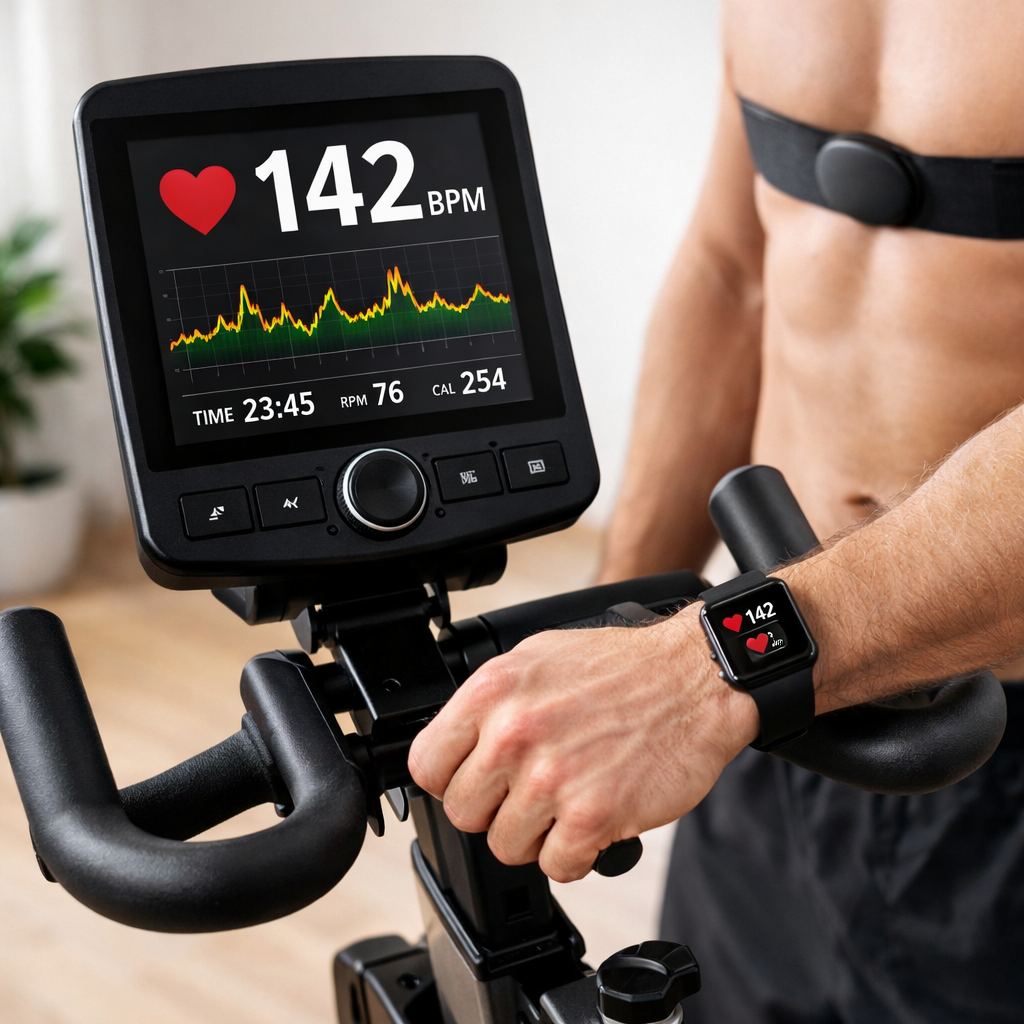
A growing number of exercise bikes now read, display, and coach from heart-rate data—either by pairing to a Bluetooth or ANT+ chest strap or by using built-in optical sensors. If you’re shopping in 2026, FitnessJudge recommends prioritizing strap compatibility and stable connectivity first; then match the bike’s software and subscription model to your training style. Below, FitnessJudge ranks standout options for accurate HR intervals, immersive studio classes, or no-subscription training, and explains the tradeoffs (strap vs optical, ANT+ vs Bluetooth, and total cost). We also include a comparison table and a cost checklist so you can forecast 12–36 month spend and find the best exercise bikes with heart rate monitor compatibility for 2026 without overpaying.
FitnessJudge methodology
Our process starts with your goal—precise HR-based intervals, immersive studio classes, or budget-friendly training without subscriptions—then narrows to the ecosystem (bike-native screen vs bring-your-own-device), ongoing costs, and build quality. We score bikes on:
- Heart-rate connectivity and reliability (chest strap support, ANT+/Bluetooth stability).
- Power accuracy (true strain-gauge vs estimated watts).
- Ride feel and resistance type (magnetic, electromagnetic, air).
- Software/subscription needs and long-term cost.
- Build quality, warranties, and ROI over 12–36 months. We evaluate connectivity under steady-state and sprint efforts to catch dropouts, lag, and pairing quirks, and we prioritize strap-first reliability and total cost transparency.
“Heart-rate training uses beats per minute and % of max heart rate to guide intensity across zones for endurance, fat loss, or intervals. Accuracy hinges on reliable sensors and stable connectivity, especially during high-intensity efforts where optical signals can lag and HR changes rapidly.”
How to choose by heart rate needs
Use this quick selection flow:
- Pick your primary goal:
- Accurate HR intervals and metrics.
- Immersive coaching and studio classes.
- Budget/no subscription with solid HR data.
- Select your sensor strategy:
- External chest/forearm strap for accuracy and consistency (our default for accuracy).
- Built-in optical for convenience (can be less reliable during sprints).
- Confirm app ecosystem and costs:
- On-bike platforms often require subscriptions for full analytics; open ergometers pair cleanly with third-party apps.
Core tradeoffs: Premium smart bikes deliver rich on-screen coaching and HR analytics but typically require ongoing memberships; ergometers and trainer-style bikes emphasize accuracy and strap-first reliability with lower recurring costs, a pattern echoed in independent smart bike roundups and hands-on reviews that compare ecosystems and sensor behavior under load (see PCMag’s smart bike roundup for examples) PCMag smart bike roundup. For consistent zone data, an ANT+ or Bluetooth chest strap is the safest bet; optical wrist or handle grips tend to falter at high intensity, a common finding across multi-bike reviews.
NordicTrack X24
NordicTrack’s iFIT platform supports auto-adjust features that change resistance and simulate terrain, enabling HR-guided rides without constant manual tweaks; SmartAdjust/AutoAdjust behavior is a hallmark of the brand’s studio-style immersion noted in mainstream buyer’s guides CNET overview of top exercise bikes. The X24’s HR approach centers on Bluetooth strap compatibility and in-class HR zones—budget for an iFIT subscription to unlock the full metrics and coaching experience. The model family has been recognized among the top premium options for feature depth and content breadth, including “best overall” nods, underscoring its ecosystem strength for users who want HR zones woven into guided workouts BarBend’s best exercise bikes list.
Who it’s for: Riders who want automated terrain/resistance tied to coach cues and in-class HR zone coaching—and who are comfortable with an ongoing subscription.
Peloton Cross Training Bike+
Peloton’s ecosystem is widely recognized as a benchmark for immersive classes and cross-training. Bike+ integrates heart-rate zones into cycling and strength blocks, and Peloton’s movement-tracking camera for strength sessions adds form-aware feedback that complements HR metrics during circuits. Bluetooth HR monitor pairing is seamless, and zone displays are built into class overlays; full analytics live behind the membership paywall. For context, Peloton’s bike footprint and capacity remain apartment-friendly for many: a typical platform measures roughly 59 x 53 x 23 inches with a near-300 lb rider cap, according to major consumer guides covering leading bikes CNET overview of top exercise bikes.
Who it’s for: Athletes who want HR zones integrated with coaching, music-driven intervals, and cross-training—plus the social accountability Peloton is known for.
Concept2 BikeErg
The BikeErg is the strap-first, accuracy-forward pick with minimal ongoing cost. Its PM5 monitor pairs quickly to ANT+ and Bluetooth chest straps and plays well with third-party apps (no subscription required), while the air-resistance flywheel and damper give a predictable workload profile ideal for structured HR intervals. Reviewers consistently highlight its durability, low maintenance, and easy portability; price hovers near $1,100, weight about 68 lb, and warranty terms are typically 5-year frame/2-year parts—figures that make it a value workhorse for data-driven training Cycling Weekly’s best exercise bikes guide.
Who it’s for: Training purists who want reliable HR strap connectivity, open app compatibility, and an ergometer feel without subscription friction.
Echelon Connect EX-5 and EX-8
Echelon’s Connect line aims for a studio feel at a friendlier price. Both EX-5 and EX-8 support Bluetooth HR monitor pairing and integrate HR zones in live/on-demand classes; the EX-8 upgrades the interface with a built-in display and enhanced resistance range, while the EX-5 relies on your own tablet. Bluetooth headphone pairing and a wide class catalog create an accessible, connected experience at a lower price than many premium bikes, as noted by mainstream reviewers. If HR training is the priority, confirm your strap protocol (Bluetooth or dual-protocol) and how zones display in the app. Membership boosts content value; third-party pairing is best if you want more flexibility.
Who it’s for: Budget-minded riders who still want HR zones with live classes and straightforward strap pairing.
Bowflex VeloCore
VeloCore’s Lean Mode adds lateral movement that engages your core and upper body; expect a slight bump in heart rate and perceived exertion compared to a locked frame during the same watt output, which can be a plus for HR-based conditioning. Onboard entertainment apps (Prime Video, Disney+, Hulu, Netflix) help pass long zone-2 sessions. Bowflex supports Bluetooth HR straps for in-ride zone displays on JRNY or compatible apps. If you’re running interval tests or repeating workouts for comparability, try locking the frame to keep HR responses more repeatable, then reintroduce Lean Mode for variety.
Who it’s for: Riders who mix steady-state HR work with core/upper-body engagement and want streaming apps built in.
Wahoo KICKR Bike V2
The KICKR Bike V2 targets serious training with road-like feel, precise electronic braking, and native pairing to ANT+/Bluetooth HR straps and leading apps (Zwift, Wahoo SYSTM, TrainerRoad). It’s BYOD for screens but straightforward for structured intervals and testing protocols. For cost planning: Wahoo SYSTM runs about $14.99/month, and Zwift is typically $19.99/month or $199.99/year per major buyer’s guides that track subscription pricing trends Live Science’s exercise bike roundup. A dual-protocol chest strap keeps HR stable across your bike, phone, and head unit if you’re cross-logging data.
Who it’s for: Training purists who value accurate control, open app choice, and bulletproof HR/app pairing.
Assault Fitness AirBike Classic and Rogue Echo
Air bikes excel for HR-based conditioning because fan resistance scales instantly with effort—perfect for HIIT and all-out sprints—but they are louder at speed and better suited to garages than small apartments. The Assault AirBike Classic adds moving arms for full-body metabolic hits and runs without wall power. The Rogue Echo is a staple in strength-conditioning spaces with a heavy-duty frame; street prices often hover around the high-$800s with capacities to roughly 330 lb in reviewer roundups that compare air-bike durability and value (for context, Rogue’s spec and pricing are frequently cited by garage gym testers). Pair either with a chest strap for precise zone work and resistant to sweat drift.
Who it’s for: Athletes who prioritize HIIT, sprints, and conditioning finishers where HR spikes are the point.
Reference: For noise/HIIT positioning and buyer-style pros/cons typical of fan bikes, see OutdoorGearLab’s examination of resistance types across top models OutdoorGearLab’s best exercise bikes. For typical Echo pricing/capacity from hands-on testers, see Garage Gym Reviews’ comparative buyer’s guides Garage Gym Reviews’ best exercise bikes.
Schwinn IC4
The IC4 is the value pick for HR pairing without subscription lock-in. You get 100 micro-adjustable resistance levels, a 330 lb max user weight, quiet magnetic resistance for apartments, and a reputation for easy app pairing across Peloton, Zwift, and more—reasons it’s frequently selected as a top versatile choice by independent testing teams Wirecutter’s pick for the best exercise bike. Add a Bluetooth chest strap, mount your tablet, and run your preferred HR dashboards without monthly fees unless you want premium content.
Who it’s for: Riders who want reliable HR zones, open app pairing, and low total cost.
At-a-glance comparison criteria
Micro-definition: “Strain-gauge power” measures force directly at the crank or spindle for high-fidelity watts. “Estimated power” infers watts from cadence and resistance and can vary by model and calibration. For HR-guided training, stable HR connectivity and clear zone displays matter more than marginal power precision.
| Bike | HR compatibility (Bluetooth/ANT+) | HR sensor included | Power data type | Resistance | Screen/app model | Membership required | Noise level |
|---|---|---|---|---|---|---|---|
| NordicTrack X24 | Bluetooth chest strap (iFIT) | No | Estimated | Electromagnetic with incline/decline | Integrated touchscreen + iFIT | Yes for full metrics/classes | Quiet |
| Peloton Bike+ | Bluetooth chest strap | No | Estimated | Magnetic with auto-follow | Integrated touchscreen + Peloton | Yes for full analytics | Quiet |
| Concept2 BikeErg | Bluetooth + ANT+ via PM5 | No | Calculated (ergometer) | Air with damper | PM5; BYOD apps | No | Moderate (fan) |
| Echelon EX-5 / EX-8 | Bluetooth chest strap | No | Estimated | Magnetic | EX-5 BYOD; EX-8 integrated screen | Recommended for classes | Quiet |
| Bowflex VeloCore | Bluetooth chest strap | No | Estimated | Magnetic; Lean Mode | Integrated screen + JRNY/streaming | JRNY optional | Quiet |
| Wahoo KICKR Bike V2 | Bluetooth + ANT+ | No | Estimated (high-accuracy control) | Electromagnetic | BYOD; app-agnostic (Zwift, SYSTM) | No (apps optional) | Very quiet |
| Assault AirBike Classic | External strap support (varies) | No | N/A (cal |