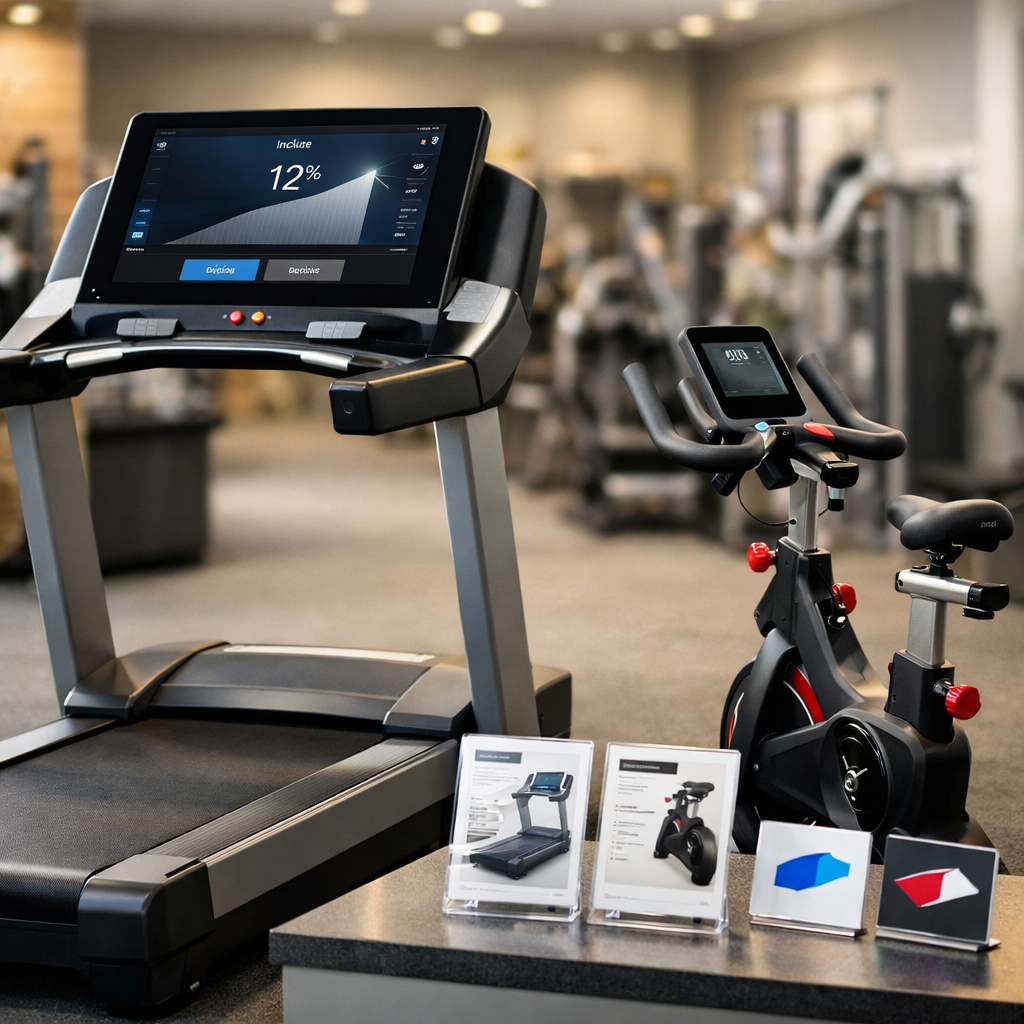
Who Sells Automatic Resistance or Incline Machines? We Found Trusted Sources
If you’re asking who sells machines with automatic resistance or incline, the answer breaks into three reliable groups: smart cardio brands with auto-follow features (NordicTrack, Peloton, Wattbike, Wahoo, ProForm, Bowflex), adaptive-resistance strength makers (e.g., ARX; flywheel systems), and certified refurbished/commercial resellers. Auto features often depend on brand apps or partner platforms, so always confirm subscription requirements and compatibility. For bikes and treadmills, FitnessJudge and other top lab roundups verify which models truly auto-adjust during classes or terrain simulation, and what’s subscription-gated, which helps avoid surprises (see OutdoorGearLab’s best exercise bikes guide). For studio-grade adaptive strength, specialized vendors outline power and space needs in detail, and reputable refurb sellers document warranty-backed reconditioning.
- Brands to start with: NordicTrack, Peloton, Wattbike, Wahoo, ProForm, Bowflex
- Channels to consider: brand-direct stores, specialty fitness dealers, certified refurbished/commercial resellers with written condition reports and warranties
FitnessJudge’s approach and what counts as automatic
Automatic resistance or incline refers to equipment that changes load or grade electronically without manual input, often following instructor cues, terrain simulations, or preset power/pace targets via integrated software or connected apps. On many models, full auto behaviors require the manufacturer’s or a partner app subscription, not just basic console controls (OutdoorGearLab’s best exercise bikes guide). This is the standard we apply in FitnessJudge reviews.
How we evaluate:
- We verify dimensions, user-weight limits, noise, and power needs from official specs; confirm which features require subscriptions; and review warranty and returns.
- We test real-world ergonomics, setup, and the responsiveness/accuracy of auto adjustments.
Key limitation: without compatible app integration, true automatic resistance or incline generally won’t function, even if the hardware supports electronic control (OutdoorGearLab’s best exercise bikes guide). Our testing across categories has confirmed this pattern.
Where to buy smart cardio with auto resistance or incline
You’ll find the best selection at brand-direct stores (NordicTrack, Peloton, Wattbike, Wahoo, ProForm, Bowflex), select big-box/e-commerce listings, and specialty fitness dealers. Many auto features are app-gated subscriptions—budget for both hardware and ongoing content access (OutdoorGearLab’s best exercise bikes guide). In-person trials help confirm fit, comfort, and noise before committing; we and other expert testers consistently recommend trying machines when possible (Consumer Reports on cardio machines).
Smart cardio comparison snapshot
| Brand/model | Auto mode type | App required? | Price range | Dimensions/weight | Notable limits | Warranty |
|---|---|---|---|---|---|---|
| NordicTrack X-series treadmill (e.g., X22i) | Auto-follow speed/incline via iFit SmartAdjust | Yes (iFit for full auto) | Premium treadmill tier | Large/heavy footprint | Steep grades available (up to ~40% incline cited) | Varies by model—confirm terms |
| Peloton Bike+ | Auto-follow resistance based on class cues | Yes (All-Access) | Premium bike tier | Compact bike footprint | Auto features tied to subscription content | Confirm before purchase |
| Wattbike Atom | Auto-resistance for terrain/ERG | Works with Wattbike Hub/third-party apps | Premium training-focused | Compact; no big touchscreen | Display choices vs media-first bikes | Confirm by region |
| Wahoo KICKR Bike V2 | Electronic terrain simulation/ERG | Third-party apps for auto-control | Around $3,999.99 | 48" x 30" x 37"; ~93 lb | 250-lb user max | Check seller terms |
| ProForm Studio Bike Pro 14 | Trainer-controlled auto via iFit | Yes (iFit) | Value to mid | Compact | Entry-level components vs pro rigs | Confirm by model |
| Bowflex (e.g., VeloCore/C7) | Model-dependent auto; JRNY-guided | Often (JRNY/features vary) | Mid to premium | Standard bike footprint | Verify auto outside JRNY | Confirm by model |
NordicTrack
NordicTrack’s SmartAdjust auto-changes speed, incline, and decline to follow iFit trainers, and its AI Coach tools help plan more personalized sessions (NordicTrack SmartAdjust). Several incline trainers reach very steep grades; models are referenced at up to 40% incline, useful for intense hiking simulations (CNET’s treadmill roundup). The brand’s X-series brings automatic incline/decline and immersive touchscreens, but plan for a heavier, larger footprint and app-centric experience (Garage Gym Reviews’ incline guide; OutdoorGearLab’s best exercise bikes guide).
Peloton
Peloton Bike+ Auto-Follow automates resistance to track class cues so you spend less time turning a knob and more time riding the workout as prescribed (OutdoorGearLab’s best exercise bikes guide). Auto-Follow is tightly integrated with subscription classes, so confirm monthly costs and cancellation terms before purchase.
- Pros: Immersive classes, seamless in-class resistance shifts, polished interface
- Cons: Recurring fees, content-centric ecosystem, placement/clearance planning still matters
Wattbike
The Wattbike Atom uses electromagnetic resistance with 22 virtual gears and can auto-adjust to simulate terrain, while supporting platforms like Zwift and the brand’s data-rich Hub for structured training (Live Science’s best exercise bikes). It’s known for realistic ride feel and performance analytics; tradeoffs include a higher price and more utilitarian display options than media-first bikes (Live Science’s best exercise bikes). Verify whether auto modes work natively or require third-party apps.
Wahoo KICKR Bike
Wahoo’s KICKR Bike V2 prioritizes training realism: electronically controlled resistance simulates gradients and power targets, but it skips a big touchscreen in favor of a small LED display (Live Science’s best exercise bikes). Key specs for planning: about 48" x 30" x 37", roughly 93 lb, 250-lb max rider, and a list price around $3,999.99, placing it among the most expensive indoor bikes (Live Science’s best exercise bikes). Confirm which apps you’ll use to enable auto features.
ProForm
ProForm’s value-forward bikes and treadmills tap iFit for automatic, trainer-controlled adjustments and scenic sessions. An accessible example is the ProForm Studio Bike Pro 14 with a swiveling 14" HD touchscreen and iFit-enabled auto controls for guided rides (Garage Gym Reviews on bikes with screens). For budgets, run the math on hardware plus iFit over the period you plan to use it.
Bowflex
Bowflex’s connected cardio, including select bikes and Max Trainer models, pairs with training apps for guided resistance and coaching. JRNY integration provides adaptive workouts and metrics, but true auto-resistance can vary by model and app; verify whether auto requires JRNY or works with your preferred platform. Compared with content-first ecosystems, Bowflex often offers broader app compatibility but fewer on-screen media frills.
Refurbished and commercial resellers
Certified refurbished equipment is pre-owned gear inspected and reconditioned with factory-grade parts when needed, then verified to meet operational standards. Reputable sellers provide written condition reports, warranty coverage, and return policies, reducing risk and upfront cost when buying complex auto-adjust machines (SOS Fitness Services’ refurbished buying guide).
What to vet:
- Written refurbishment scope and parts replaced
- Warranty term, in-home service radius, and return window
- Confirmation that auto features and app connectivity are fully functional
Benefit: lower cost with pro reconditioning. Caution: policies and service coverage vary—perform due diligence (SOS Fitness Services’ refurbished buying guide).
Adaptive resistance strength systems
Adaptive resistance is a motorized or flywheel-driven system that matches load to your force output in real time using sensors and software, removing manual plate or pin changes. It enables eccentric overload, tight time-under-tension control, and precise tracking for high-intensity, time-efficient strength sessions.
Two categories:
- Motorized systems (e.g., ARX) deliver fully software-controlled loading with safety interlocks and rich data for studios or advanced homes.
- Flywheel/inertial systems (e.g., Exxentric kBox) scale resistance with effort—no motors or wall power—still providing eccentric emphasis and metrics.
Tradeoffs: high prices, larger footprints, and potential power needs—offset by time efficiency and robust progression tracking.
ARX
ARX highlights efficiency, claiming an adaptive-resistance session can compress an hour-long workout to roughly six minutes due to continuous, matched loading (ARX’s machine specs). Planning specs: about 89.6" H x 41.6" W x 128" L and roughly 680 lb assembled; power is 110V (15A) or 220V (20A), and it’s incompatible with GFCI outlets (ARX’s machine specs). Before purchase, map the delivery path, floor loading, in-room assembly, service plan options, and training/software onboarding.
Exxentric
Exxentric’s flywheel systems provide hands-off load modulation that scales with your effort, enabling eccentric-focused work and actionable performance metrics—adaptive in feel without motors or mains power. Quick contrasts vs ARX:
- Footprint: smaller platforms vs large frames
- Power: none required vs dedicated circuits
- Price: lower tiers vs premium
- Tools: robust data/coach apps in both; portability favors flywheel units
Best for athletes, PT/rehab settings, and limited-space home gyms. Check certifications and accessory bundles for your use case.
How automatic resistance and incline work
- Auto-follow: the machine adjusts resistance, speed, or incline in real time to match instructor cues or workout scripts, such as Peloton Bike+ Auto-Follow or iFit SmartAdjust during classes and scenic rides (OutdoorGearLab’s best exercise bikes guide).
- Standalone auto-control: the machine holds targets or simulates terrain without live instruction (e.g., ERG power targets or uploaded route gradients).
Many machines need a subscription/app to unlock full automatic behaviors (OutdoorGearLab’s best exercise bikes guide).
Price ranges and total cost of ownership
A helpful anchor: the Wahoo KICKR Bike V2 is listed around $3,999.99, squarely in the ultra-premium tier (Live Science’s best exercise bikes). NordicTrack and ProForm typically price lower but add subscription costs for full auto features.
Total cost of ownership is the all-in expense across the product’s life: purchase price, delivery/assembly, subscriptions, accessories (mats, pedals, sensors), electricity, maintenance, and possible service calls under warranty. Accounting for TCO prevents underestimating recurring content fees and setup costs that affect real-world value.
TCO checklist
- Hardware price
- Subscription(s)
- Delivery/assembly
- Extended warranty
- Accessories (mat, pedals, HR strap)
Buying checklist for auto-adjust machines
- Decide between auto-follow classes versus standalone auto-resistance for terrain/ERG.
- Verify app compatibility and monthly subscription cost for full auto features.
- Confirm dimensions, user-weight limits, and noise profile; treadmills are often the loudest for apartments (Consumer Reports on cardio machines).
- Compare warranty/return policies and refurbished certifications in writing.
- Test comfort and interface in person when possible.
Also consider: desired incline range (some treadmills reach up to ~40%), screen size, and white-glove delivery/assembly options (CNET’s treadmill roundup).
Delivery, setup, and space planning
Measure doorways, stairs, and final placement. For context, a Wahoo KICKR Bike weighs about 93 lb, while an ARX unit can reach roughly 680 lb—planning varies dramatically (Live Science’s best exercise bikes; ARX’s machine specs). Power matters: ARX needs 110V (15A) or 220V (20A) and is incompatible with GFCI outlets (ARX’s machine specs). Pre-delivery: floor protection, ceiling height for incline/standing, ventilation, and strong Wi‑Fi for streaming.
Warranties, returns, and service support
Check frame/motor/electronics coverage, in-home labor, parts availability, and claim timelines. For refurbished gear, insist on written condition reports, parts replaced, and warranty length—and confirm auto features and app pairing are certified functional (SOS Fitness Services’ refurbished buying guide). Safety tip: place treadmills properly, use safe start/stop habits, and consider that they’re often the loudest cardio option (Consumer Reports on cardio machines).
Who should choose auto-follow vs standalone auto control
- Choose auto-follow if you’re motivated by classes and want the machine to match instructor cues automatically—Peloton and NordicTrack excel here.
- Choose standalone auto-control if you prioritize realistic route simulation or ERG power targets with broader app ecosystems—Wattbike and Wahoo are standouts (Live Science’s best exercise bikes). Note that performance bikes often trade touchscreens for realism and app flexibility.
How we verify specs and evaluate auto adjust performance
Our method: we confirm dimensions, weight limits, and power needs from official spec sheets; cross-check independent lab reviews; and measure noise. We time incline changes (e.g., to 10%), evaluate resistance step latency, and monitor connectivity stability and subscription gating. We also compare warranty terms, service networks, and total cost of ownership, and we conduct ergonomic fit checks—recommending in-person trials when feasible (Consumer Reports on cardio machines). It’s the same rubric we apply in FitnessJudge buying guides.
Frequently asked questions
What is the difference between auto-follow and automatic resistance control?
Auto-follow adjusts settings to match instructor cues during classes, while automatic resistance control simulates terrain or holds power/grade targets without live instruction; at FitnessJudge, we test both for reliability.
Do I need a subscription for auto features to work?
Often yes—many machines require a brand or partner app to unlock full automatic resistance or incline features; in FitnessJudge reviews, we call out exactly what’s subscription-gated.
How much space and floor support do these machines require?
It varies widely—from sub-100 lb smart bikes to 600+ lb commercial units—so measure access paths and confirm floor loading and power; FitnessJudge checklists cover these basics.
What should I check during an in-person trial?
Confirm fit, control placement, screen visibility, and how quickly auto adjustments respond; at FitnessJudge, we also check noise, incline transitions, and connectivity.
Are refurbished auto-adjust machines a safe buy?
Yes—if you use certified resellers with condition reports, warranty coverage, and clear return policies; FitnessJudge recommends verifying auto features and app pairing before purchase.